The 8 Days Kilimanjaro New Year Summit Lemosho Group Starting 26 December 2026 offers a prime opportunity to conquer Africa’s highest peak with a well-paced itinerary, aiming for a spectacular New Year’s Eve summit. This specific departure date on December 26, 2026, is designed for a group setting, providing shared camaraderie and cost-effectiveness while utilizing the scenic and highly recommended Lemosho route for its superior acclimatization profile. Expect comprehensive support from experienced local guides and crew dedicated to your safety and success in reaching Uhuru Peak by the dawn of 2027.
Understanding the 8 Days Kilimanjaro Lemosho Group, Dec 26, 2026 Departure
This specific departure date, December 26, 2026, for an 8-day Lemosho route group trek to the summit of Kilimanjaro is strategically chosen to culminate in a New Year’s Eve or New Year’s Day summit bid. It’s more than just a date; it represents a unique blend of a challenging adventure and a celebratory moment atop Africa. The Lemosho route is consistently favored by operators like Climb 4 Africa for its longer duration, which significantly aids acclimatization, a critical factor for summit success. An 8-day Lemosho trek is considered one of the most balanced options, offering a good balance between acclimatization time and the overall trek duration. It allows for a more gradual ascent, increasing your body’s ability to adjust to the thinning air as you gain altitude. This reduces the risk of altitude sickness and enhances your chances of reaching Uhuru Peak feeling as strong as possible.
Opting for a group departure means you’ll be trekking with like-minded individuals. This can be a fantastic way to share the experience, motivate each other, and often makes the trip more economical. For a New Year’s climb, the camaraderie within a group can be particularly special, celebrating milestones together and sharing the thrill of reaching the summit on or around January 1st, 2027. Climb 4 Africa specializes in creating these group experiences, ensuring that each member receives personalized attention and support despite the group setting. The focus is always on safety, enjoyment, and maximizing your chances of a successful summit, especially during a peak season like the New Year period.
Why Choose the Lemosho Route for a New Year Climb?
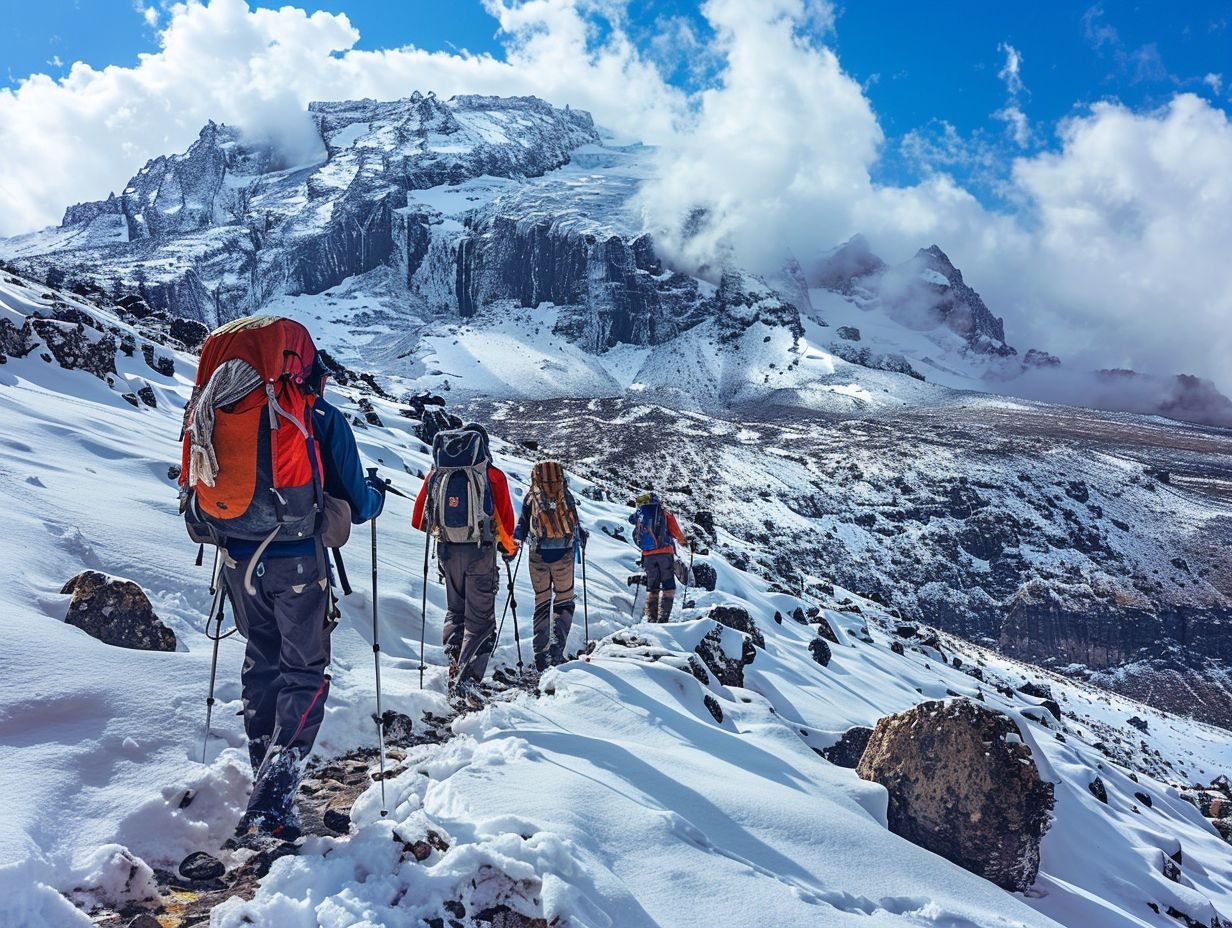
The Lemosho route stands out for several compelling reasons, especially when planning a significant trek like the 8 Days Kilimanjaro New Year Summit Lemosho Group Starting 26 December 2026. It’s renowned for its scenic beauty, starting on the western side of Kilimanjaro and traversing the diverse landscapes of the mountain, from rainforests to alpine deserts and the arctic summit zone. Unlike shorter routes, Lemosho offers a more gradual ascent profile. For an 8-day itinerary, this means more days spent at higher altitudes, allowing your body to adapt more effectively to the reduced oxygen levels. This is paramount for preventing or mitigating altitude sickness, a primary concern for any Kilimanjaro climber.
Key advantages of the Lemosho route for this specific departure:
- Superior Acclimatization: The 8-day Lemosho itinerary provides ample time for acclimatization, significantly increasing your chances of reaching the summit and enjoying the experience. This is crucial for a New Year’s climb when conditions can be challenging.
- Scenic Variety: You’ll trek through pristine rainforests, cross the Shira Plateau, and experience the unique volcanic landscapes of Kilimanjaro’s upper reaches. The views are consistently spectacular.
- Lower Crowds Initially: Lemosho starts in a more remote area, offering a quieter and more in-depth trekking experience in the initial days before joining the main trails.
- Higher Success Rates: Due to its gentle gradient and longer duration, the 8-day Lemosho route is statistically associated with higher summit success rates.
- New Year’s Eve Summit Potential: The 8-day schedule is perfectly timed to position trekkers near the summit zone for a New Year’s Eve or early New Year’s Day ascent, creating an unparalleled celebration.
For a New Year’s climb, weather conditions can be a factor. While December and January are generally part of the short rainy season, Kilimanjaro’s weather is highly variable. The Lemosho route’s varied terrain can offer some protection, and its acclimatization benefits are invaluable regardless of the weather. Choosing this route for the 8 Days Kilimanjaro New Year Summit Lemosho Group Starting 26 December 2026 departure is a decision geared towards comfort, safety, and maximizing your overall experience, ensuring you are well-prepared for the ultimate challenge.
The 8-Day Lemosho Itinerary: A Day-by-Day Breakdown for Dec 2026
The 8-day Lemosho route itinerary is meticulously crafted to balance acclimatization, scenic beauty, and the ultimate goal of reaching Uhuru Peak. For the 8 Days Kilimanjaro New Year Summit Lemosho Group Starting 26 December 2026, this schedule is designed to bring you to the summit area for the crucial New Year’s transition.
Day 1: Arrival in Tanzania & Transfer to Moshi (December 26, 2026)
Arrive at Kilimanjaro International Airport (JRO). You will be met by a Climb 4 Africa representative and transferred to your comfortable hotel in Moshi. This day is for rest, final gear checks, and an essential pre-trek briefing by your guide.
Day 2: Machame Gate to Machame Camp
Start Point: Machame Gate (1,800m/5,905ft)
End Point: Machame Camp (3,000m/9,842ft)
Trek Time: 5-7 hours
Trek Distance: Approx. 11 km/7 miles
Habitat: Rainforest
After breakfast, you’ll be driven to the Machame Gate. After park formalities, you begin your trek through the lush rainforest. The trail can be muddy and slippery, but the dense canopy offers shade. You’ll reach Machame Camp in the late afternoon.
Day 3: Machame Camp to Shira 2 Camp
Start Point: Machame Camp (3,000m/9,842ft)
End Point: Shira 2 Camp (3,850m/12,631ft)
Trek Time: 4-6 hours
Trek Distance: Approx. 5 km/3 miles
Habitat: Moorland
Today’s trek takes you out of the forest and into the moorland zone. The path climbs steadily, offering increasingly panoramic views. You’ll cross a small stream and ascend to the Shira Plateau, eventually reaching Shira 2 Camp, a spectacular campsite on the plateau.
Day 4: Shira 2 Camp to Lava Tower to Barranco Camp
Start Point: Shira 2 Camp (3,850m/12,631ft)
End Point: Barranco Camp (3,970m/13,024ft)
Trek Time: 6-8 hours
Trek Distance: Approx. 10 km/6 miles
Habitat: Semi-desert
This is a crucial acclimatization day. You’ll ascend towards the Lava Tower (4,630m/15,190ft), a prominent landmark. After a break and lunch, you descend significantly to Barranco Camp. This ‘climb high, sleep low’ strategy is vital for acclimatization. The views of the Western Breach and the surrounding landscape are magnificent.
Day 5: Barranco Camp to Karanga Camp
Start Point: Barranco Camp (3,970m/13,024ft)
End Point: Karanga Camp (4,035m/13,238ft)
Trek Time: 3-5 hours
Trek Distance: Approx. 5 km/3 miles
Habitat: Alpine desert
The day begins with the famous Barranco Wall, a steep climb that requires scrambling and can be a highlight for many. While challenging, it’s not technically difficult and is well-managed by your guides. After descending the wall, you’ll trek through alpine desert landscapes to Karanga Camp, situated in a valley.
Day 6: Karanga Camp to Barafu Camp
Start Point: Karanga Camp (4,035m/13,238ft)
End Point: Barafu Camp (4,640m/15,223ft)
Trek Time: 3-5 hours
Trek Distance: Approx. 4 km/2.5 miles
Habitat: Alpine desert
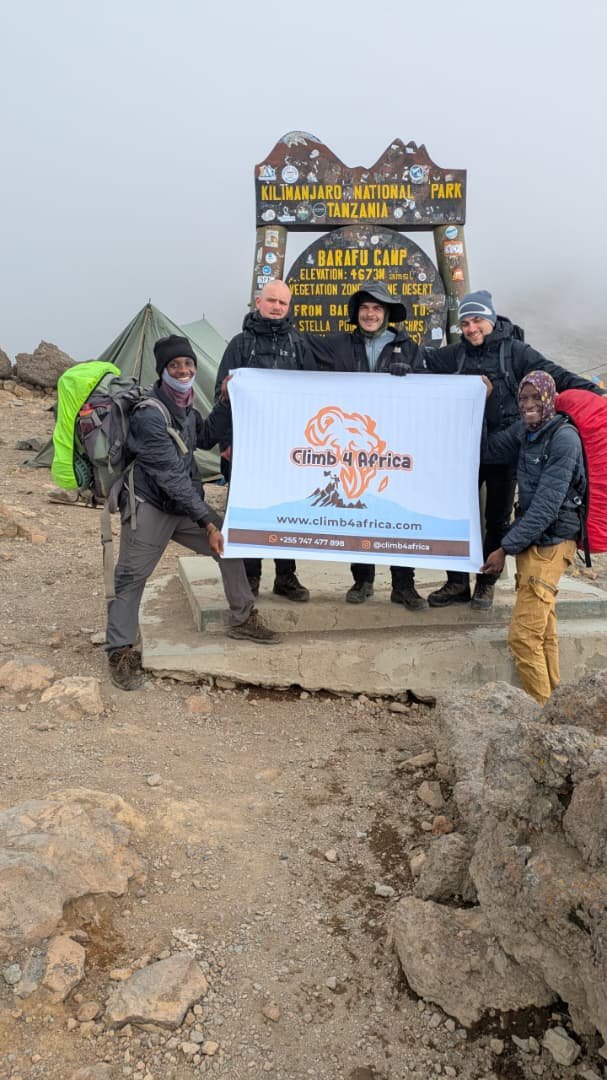
Today you ascend towards the saddle between Uhuru Peak and the Mawenzi peak. The terrain becomes more barren and exposed. You’ll reach Barafu Camp, the base camp for your summit attempt, in the early afternoon. This allows ample time for rest, hydration, and preparation for the night’s summit push. Dinner is served early, and you’ll try to get some sleep before midnight.
Day 7: Summit Day! Barafu Camp to Uhuru Peak to Mweka Camp
Start Point: Barafu Camp (4,640m/15,223ft)
End Point: Mweka Camp (3,100m/10,170ft)
Trek Time: 10-14 hours (summit push & descent)
Trek Distance: Approx. 12 km/7.5 miles (ascent) + 7 km/4.5 miles (descent)
Habitat: Arctic to Rainforest
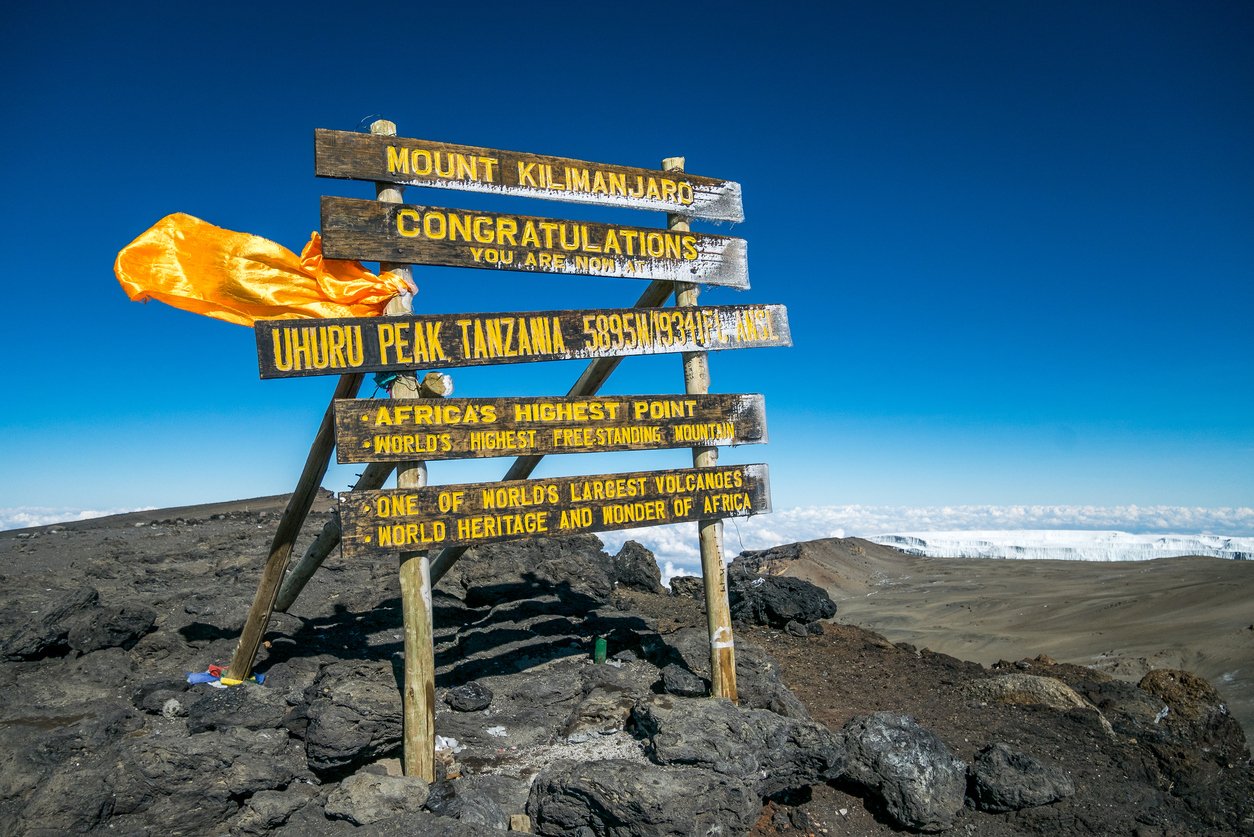
This is the most demanding day. You’ll begin your ascent around midnight, trekking in the dark with headlamps. The climb is steep and slow, aiming to reach Stella Point (5,756m/18,885ft) by sunrise. From Stella Point, you continue for about an hour to Uhuru Peak (5,895m/19,341ft), the Roof of Africa. After celebrating your achievement and taking photos, you’ll descend back to Barafu Camp for a short rest before continuing the long descent to Mweka Camp.
Day 8: Mweka Camp to Mweka Gate & Departure (January 2, 2027)
Start Point: Mweka Camp (3,100m/10,170ft)
End Point: Mweka Gate (1,640m/5,380ft)
Trek Time: 3-5 hours
Trek Distance: Approx. 10 km/6 miles
Habitat: Rainforest
After breakfast, you complete the final descent through the rainforest to Mweka Gate. Here, you’ll be met by your driver and transferred back to your hotel in Moshi for a well-deserved celebration. Depending on your flight schedule, you might depart for the airport today or the following day.
Group Trek Dynamics: Pros, Cons, and Expectations
Joining a group trek for the 8 Days Kilimanjaro New Year Summit Lemosho Group Starting 26 December 2026 is a popular choice for many adventurers. Understanding the dynamics of group travel is key to ensuring a positive and successful experience. Climb 4 Africa facilitates these group departures with a focus on creating a supportive and enjoyable environment for all participants.
Advantages of Group Trekking:
- Cost-Effectiveness: Sharing resources like guides, porters, cooks, and equipment typically lowers the per-person cost compared to a private trek. This makes reaching Kilimanjaro more accessible.
- Shared Motivation and Camaraderie: Trekking with others provides a built-in support system. You’ll share the challenges and triumphs, fostering strong bonds and mutual encouragement. This can be especially uplifting during tough moments on the mountain, like the summit night.
- Social Experience: For solo travelers or those whose friends couldn’t join, a group trek offers a ready-made social circle. Sharing meals, stories, and the incredible scenery with new friends can enhance the overall journey.
- Expert Guidance: Even in a group, you receive the full attention of experienced local guides, cooks, and porters. The crew is trained to manage group dynamics and ensure everyone is cared for.
Potential Considerations:
- Pace Differences: Individuals walk at different paces. While guides manage the group’s speed, there might be times when faster walkers wait for slower ones, or vice versa. The Lemosho route’s gradual ascent helps minimize this, but it’s a factor to be aware of.
- Shared Facilities: While private tents are standard, common areas for meals and socializing are shared.
- Group Size: Group sizes can vary. Climb 4 Africa aims for manageable group sizes to ensure personalized attention and a good trekking experience. It’s always wise to inquire about the expected group size for your specific 2026 departure.
Climb 4 Africa’s approach to group treks emphasizes a balance: ensuring the group moves at a comfortable pace for everyone, with ample support from the crew. The goal is for everyone to enjoy the journey and maximize their chances of reaching the summit on New Year’s. The 8 Days Kilimanjaro New Year Summit Lemosho Group Starting 26 December 2026 departure is structured to foster this positive group dynamic.
Preparing for Your 2026 Kilimanjaro New Year Climb
Successfully summiting Kilimanjaro, especially during the New Year period on the 8 Days Kilimanjaro New Year Summit Lemosho Group Starting 26 December 2026, requires thorough preparation. This isn’t just about booking the trip; it’s about physical, mental, and logistical readiness. Climb 4 Africa provides detailed pre-departure information, but proactive preparation is essential.
Physical Training:
- Cardiovascular Fitness: Focus on endurance activities like hiking, running, cycling, or swimming. Aim for at least 3-4 sessions per week for several months leading up to your trek.
- Hiking with a Pack: Regularly hike with a backpack that simulates the weight you’ll carry on Kilimanjaro (around 5-10 kg). Include hills or stairs in your training.
- Strength Training: Strengthen your legs (quads, hamstrings, calves) and core. Squats, lunges, and step-ups are beneficial.
- Altitude Simulation (Optional): If you live at high altitude, this is a significant advantage. If not, focus on consistent cardiovascular training.
Gear and Equipment:
Proper gear is crucial for comfort and safety. Layers are key to managing temperature fluctuations. Essential items include:
- Clothing: Moisture-wicking base layers, insulating mid-layers (fleece, down jacket), waterproof and windproof outer shell (jacket and trousers), warm hat, gloves, and socks.
- Footwear: Broken-in, waterproof hiking boots are non-negotiable.
- Sleeping Gear: A warm sleeping bag (rated to -15°C or lower), sleeping mat.
- Trekking Gear: Trekking poles, headlamp with extra batteries, sunglasses, high SPF sunscreen, lip balm, reusable water bottles or hydration reservoir, and a comfortable daypack.
- Personal Items: Basic toiletries, personal first-aid kit, camera, power bank.
Climb 4 Africa can provide a comprehensive gear list upon booking. It’s advisable to purchase or rent essential items well in advance of your December 2026 departure.
Mental Preparation:
Kilimanjaro is as much a mental challenge as a physical one. Understand the risks of altitude sickness, be prepared for cold temperatures, and embrace the slow pace of trekking. A positive attitude and determination are invaluable assets. Visualizing success and understanding the ‘pole pole’ (slowly, slowly) philosophy will serve you well.
Health and Vaccinations:
Consult your doctor or a travel clinic 6-8 weeks before your trip regarding recommended vaccinations and malaria prophylaxis. While altitude sickness is the primary health concern on the mountain, general travel health advice is important for your time in Tanzania.
Logistics for 2026-2027:
Ensure your passport is valid for at least six months beyond your travel dates and has sufficient blank pages. Arrange travel insurance that covers high-altitude trekking and emergency evacuation. Book your flights to Kilimanjaro International Airport (JRO). You’ll need a visa for Tanzania, which can often be obtained on arrival or in advance online.
What’s Included and Excluded in Your 8-Day Lemosho Package
Understanding what is included in your tour package is crucial for budgeting and managing expectations. For the 8 Days Kilimanjaro New Year Summit Lemosho Group Starting 26 December 2026, Climb 4 Africa aims for transparency. While specific inclusions can vary slightly, a comprehensive package typically covers the essential elements for a safe and successful climb.
Typical Inclusions for an 8-Day Lemosho Climb:
- Park Fees: All national park entry fees, camping fees, and conservation fees for Kilimanjaro National Park. These are significant costs and are usually covered.
- Accommodation: Two nights hotel accommodation in Moshi before and after the trek.
- Crew: Professional, experienced, and licensed Kilimanjaro guides, assistant guides, cooks, and porters. The crew ratio is important for safety and support.
- Equipment: Camping equipment (tents, mess tent, table, chairs), cooking equipment, and food for all meals on the mountain.
- Meals: All meals on the mountain (breakfast, lunch, dinner) and in the Moshi hotel (often breakfast only, confirm with operator).
- Water: Boiled or purified drinking water on the trek.
- Transfers: All necessary transfers from Kilimanjaro International Airport (JRO) to your hotel in Moshi and from Moshi to the Machame Gate, and from Mweka Gate back to Moshi.
- Emergency Support: Oxygen cylinders and a comprehensive first-aid kit carried by guides. Emergency evacuation services are often coordinated.
- Pre-Trek Briefing: A detailed briefing session with your guide in Moshi.
Typical Exclusions:
- Flights: International flights to and from Kilimanjaro International Airport (JRO).
- Visa: Tanzania visa fees.
- Tips: Gratuities for guides, porters, and cooks. This is a significant part of the crew’s income and should be budgeted for.
- Personal Gear: Sleeping bag, trekking poles, rain gear, warm clothing, etc. (unless specified otherwise).
- Travel Insurance: Comprehensive travel and medical insurance, including emergency evacuation.
- Personal Expenses: Souvenirs, alcoholic beverages, extra snacks, laundry, and personal items.
- Optional: Hot shower fees at certain camps (if available and desired).
- Gratuity for Hotel Staff: If applicable.
It is vital to confirm the exact inclusions and exclusions with Climb 4 Africa when booking your 8 Days Kilimanjaro New Year Summit Lemosho Group Starting 26 December 2026 trek. This ensures you are fully aware of all costs and what to pack.
Summiting for New Year’s Eve: The Ultimate Experience
The prospect of reaching Uhuru Peak on New Year’s Eve or early New Year’s Day is a truly extraordinary goal. The 8 Days Kilimanjaro New Year Summit Lemosho Group Starting 26 December 2026 departure is specifically designed to facilitate this. This timing offers a unique blend of personal achievement and a special celebration at the highest point in Africa.
Imagine standing on the roof of the continent as midnight strikes or the sun rises on January 1st, 2027. The feeling of accomplishment, combined with the impressive panorama of stars and the vastness of the African continent below, is unparalleled. The summit night is undoubtedly the most challenging part of the trek. It begins in the late evening of Day 7 (December 31st, 2026), with trekkers ascending in the dark, often in cold temperatures and high winds, relying on headlamps and the guidance of their team. The air is thin, and every step requires significant effort.
The ascent to Stella Point, the crater rim, is typically completed before dawn. Witnessing the sunrise from this vantage point, with views stretching across the clouds and the volcanic landscape, is a profoundly moving experience. From Stella Point, it’s a further hour-long walk along the crater rim to Uhuru Peak (5,895m/19,341ft). This final push, often in the early hours of January 1st, 2027, is the culmination of months of planning and training.
Key aspects of a New Year’s Summit:
- Emotional Significance: Marking the transition into a new year with such a monumental achievement creates indelible memories.
- Challenging Conditions: While December and January are generally good trekking months, New Year’s Eve summit attempts can coincide with colder temperatures and potential for snow or ice. Proper gear and mental fortitude are essential.
- Group Celebration: Sharing this moment with your fellow trekkers and the Climb 4 Africa crew adds to the magic. Small celebrations, shared words of encouragement, and group photos are common.
- Post-Summit Descent: While the summit is the goal, remember that the descent is equally important and can be tiring. The satisfaction of reaching the summit on New Year’s makes the descent more manageable.
Climb 4 Africa understands the unique aspirations of trekkers aiming for a New Year’s summit. Our guides are experienced in managing summit pushes during this special time, prioritizing safety while ensuring you have the best possible chance to achieve your goal. The 8 Days Kilimanjaro New Year Summit Lemosho Group Starting 26 December 2026 is your gateway to this extraordinary experience.
Booking Your 2026 Kilimanjaro New Year Trek with Climb 4 Africa
Securing your spot on the 8 Days Kilimanjaro New Year Summit Lemosho Group Starting 26 December 2026 is the first concrete step towards realizing your dream of summiting Kilimanjaro. Climb 4 Africa, as an expert local operator, offers a direct and reliable way to book this specific group departure, ensuring you receive authentic support and local expertise.
When you are ready to commit to this incredible adventure, reaching out to Climb 4 Africa is straightforward. We understand that planning a trip like this involves questions and requires confidence in your chosen operator. Our team is dedicated to providing clear, honest information to help you make an informed decision.
To book or inquire further about the 8 Days Kilimanjaro New Year Summit Lemosho Group Starting 26 December 2026:
- Contact Us Directly: The most efficient way to get personalized assistance is to contact us. You can reach us via WhatsApp at +255 747 477 898. This is ideal for quick questions or to initiate the booking process.
- Email Inquiry: For more detailed questions or to request a formal quote and itinerary, send an email to climb4africa@gmail.com. Please mention the specific trek and date: ‘8 Days Kilimanjaro New Year Summit Lemosho Group Starting 26 December 2026’.
- Website: Visit our website Climb 4 Africa for more information about our services, other trek options, and Tanzania safaris.
When you contact us, it’s helpful to provide any initial questions you may have, your intended travel dates (confirming the December 26, 2026 departure), and any specific concerns regarding training, gear, or the New Year’s summit attempt. Our team will guide you through the booking process, including deposit requirements, payment schedules, and pre-departure preparations. Choosing Climb 4 Africa means partnering with a company deeply rooted in Tanzania, committed to sustainable tourism, and focused on delivering an exceptional Kilimanjaro experience, especially for milestone trips like a New Year’s summit climb in 2026-2027.
Check Availability for 8 Days Kilimanjaro New Year Summit Lemosho Group Starting 26 December
Ready to compare dates, prices, and the best option for your group? Send the package name and travel month so the team can reply with a clear quote, availability, and what is included.
Kilimanjaro Climb : Guided Group Tours & Planning Guide 2026-2027
A deep look at planning your 2027 Kilimanjaro expedition. Learn why guided group tours are the preferred choice for safety, logistics, and shared camaraderie on the roof of Africa.
View package details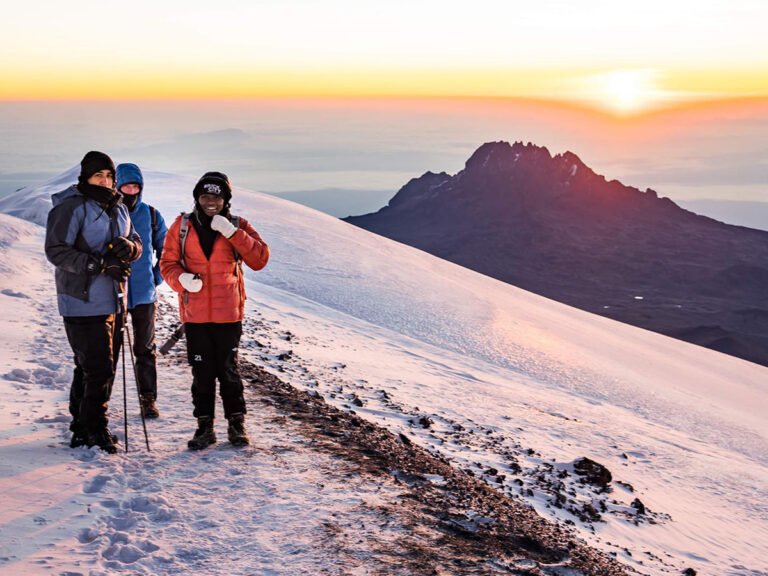
Kilimanjaro Machame Route 7 Days: A Practical Guide To Itinerary And Costs
A deep look at the 7-day Machame Route on Kilimanjaro. Understand the itinerary, why the extra day matters for your summit success, and how to plan your 2026-2027 expedition.
View package details
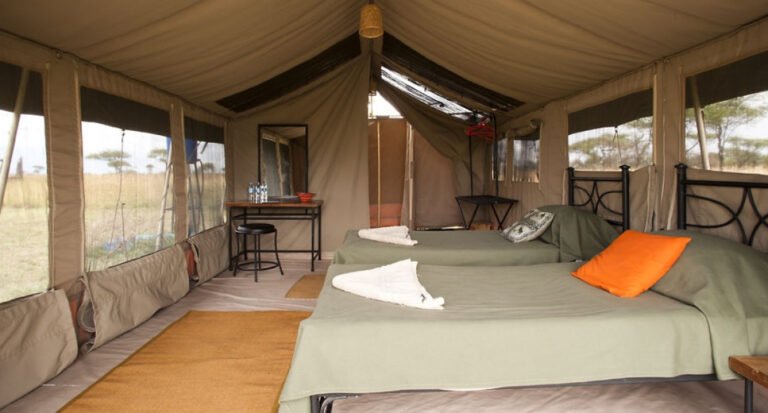
Afcon Kilimanjaro Ngorongoro And Zanzibar Holiday
AFCON 2027 Kilimanjaro Ngorongoro and Zanzibar Holiday.
View package details
Afcon Mount Kilimanjaro And Serengeti Package
AFCON 2027 Mount Kilimanjaro and Serengeti Package.
View package details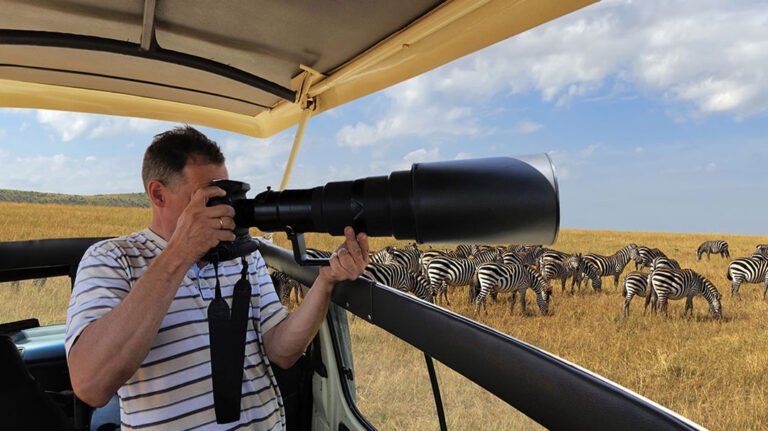
Kilimanjaro Safari And Afcon Final Package
Kilimanjaro Safari and AFCON Final Package.
View package details
Kilimanjaro To Kampala Afcon Travel Package
Kilimanjaro to Kampala AFCON Travel Package.
View package detailsKilimanjaro to Nairobi AFCON Travel Package
Mpango wa safari wa Kilimanjaro hadi Nairobi kwa AFCON unaowezesha kushuhudia milima na miji miwili mikubwa ya Afrika pamoja na mechi za AFCON kwa njia salama na ya kipekee.
View package detailsKilimanjaro to Dar es Salaam AFCON Travel Package
Mpango wa kipekee wa Kilimanjaro hadi Dar es Salaam kwa AFCON 2027 unachanganya milima, bahari na mandhari za Tanzania, huku ukitoa ufafanuzi wa njia, upangaji na chaguo za utekelezaji.
View package details
Kilimanjaroo Airport to AFCON Host City Transfer
Katika ukurasa huu wa kina, tunakuletea mwongozo wa kina juu ya jinsi ya kuhamisha kutoka Uwanja wa Kilimanjaro kwenda mjini litakalohudhuria AFCON 2027, pamoja na mapendekezo ya usafiri...
View package details
Kilimanjaroo Climb After AFCON 2027
Mwongozo wa kina wa kupanda Kilimanjaro baada ya AFCON 2027: njia zinazofaa, ratiba inayoakisi acclimatization, na vidokezo vya kupanga pamoja na namna ya kuwasiliana na Climb 4 Africa kwa...
View package details
No related package matches those filters. Clear one or more filters to see the other topic-matched options.