
If you are searching for last-minute flights in Tanzania, it is important to recalibrate your expectations. Unlike international travel where airlines may drop prices to fill empty seats, the domestic aviation market in Tanzania—primarily consisting of smaller bush planes—operates on a model of limited capacity and high, fixed demand. Booking last-minute in Tanzania rarely results in a “deal.” Instead, it often leads to sold-out flights, significantly higher premiums, or the necessity to book a private charter, which is vastly more expensive. For travel between Arusha, the Serengeti, and Zanzibar, the most reliable strategy is to secure your seats at least 3 to 6 months before your travel date, particularly during peak safari seasons.
The thrill of spontaneous travel is a wonderful concept, but when applied to the logistical landscape of Tanzania, it frequently clashes with the reality of how safari aviation functions. To understand why your search for last-minute flights in Tanzania might be difficult, you must first view these flights not as commercial mass transit, but as a specialized, small-scale transport service.
The Reality of Domestic Aviation in Tanzania
Most domestic flights in Tanzania, particularly those connecting Arusha to the Serengeti, Ruaha, or Zanzibar, are operated by light aircraft. These planes—often Cessna Caravans or similar models—seat between 12 and 14 passengers. Because the supply of seats is extremely finite, airlines do not need to rely on “last-minute sales” to manage inventory. If a flight is not booked, it either does not fly or is consolidated, meaning the available seats are usually claimed by travelers who planned months in advance.
When you attempt to book last-minute flights in Tanzania, you are competing against pre-booked safari groups, luxury lodges that reserve seats for their guests, and business travelers. If you cannot find a seat on the scheduled time you want, your only alternative might be a private charter, which is a significant jump in cost. This is why we consistently advise travelers to treat their domestic flights with the same level of priority as their international long-haul tickets.
Why Last-Minute Fares Rarely Save Money
In many global travel markets, booking late can sometimes be a gamble that pays off. In Tanzania, the pricing structure is rigid. The airlines serving the bush routes—such as Coastal Aviation, Auric Air, and Regional Air—operate on a tariff system that generally increases as availability decreases. There is no incentive for them to lower prices; the operational costs of flying a small plane into a remote dirt airstrip are fixed and high.
Consider these factors that drive up the price of last-minute bookings:
- Operational Overhead: The cost of maintaining aircraft and landing fees at remote bush airstrips remains constant regardless of how many passengers are on board.
- Demand Spikes: During the Great Migration or school holiday periods, the demand for routes like Arusha to Serengeti significantly outstrips the number of available seats.
- Limited Competition: On many remote routes, there may only be one or two scheduled flights per day. If those are full, you are effectively priced out of the standard market.
For those looking to understand the cost dynamics better, our guide on Cheapest Domestic Airlines in Tanzania: Prices & Routes 2027 provides a deeper look into how these carriers structure their fares throughout the year.
Comparing Booking Timelines: A Strategic View
To help you decide when to commit to your travel plans, we have outlined the standard behavior of the Tanzanian flight market based on typical demand cycles.
| Booking Window | Availability | Price Trend | Strategic Risk |
|---|---|---|---|
| 6+ Months Out | High | Baseline/Standard | Low (Best for planning) |
| 3 Months Out | Moderate | Increasing | Moderate |
| Less than 1 Month | Very Low | Premium/Sold Out | High (Likely to disrupt itinerary) |
Logistical Challenges of Last-Minute Changes
Beyond the ticket price, booking last-minute flights in Tanzania introduces significant logistical risks that can derail an entire safari itinerary. When you book a flight last-minute, you may be forced to accept sub-optimal connections. For instance, you might arrive at Kilimanjaro International Airport (JRO) and need to transfer to Arusha Airport (ARK) for your bush flight. If you book these as separate, last-minute tickets, you leave no buffer for flight delays, immigration queues, or traffic.
An expert tour operator, such as Climb 4 Africa, mitigates these risks by coordinating your ground transfers with your flight arrival times. We know that a flight from Zanzibar to Arusha often requires a specific connection window to ensure you don’t miss your onward safari departure. You can read more about these connections in our breakdown of Zanzibar to Arusha Flights: Prices, Airlines & Booking.
How to Manage Your Itinerary Flexibility
If your travel dates are somewhat flexible, you have a better chance of securing a seat, even if you are booking closer to your departure date. Here is how you can approach this:
- Be Open to Alternative Airports: If flying into the Serengeti, be prepared to fly into a different airstrip than your first choice. The park has many airstrips (Seronera, Kogatende, Lobo), and being flexible with your landing point can open up more flight availability.
- Consider Road Transfers: If flight prices are astronomical or seats are sold out, don’t despair. A private vehicle transfer is a standard way to travel between many Tanzanian locations. While it takes longer, it is often more reliable and allows for better scenery viewing than flying over it.
- Consolidate Your Travel: If you are planning a multi-stop itinerary—for example, Kilimanjaro climb, followed by a safari, then Zanzibar—ensure all your internal flights are booked as part of your overall package. This prevents the nightmare of trying to secure a last-minute flight in the middle of your trip.
If you are in the planning stages and want to see how these logistics fit together, our Tanzania Fly-In Safari Packages 2027 guide offers a clear look at how to bundle these elements to avoid the last-minute scramble.
Booking Through a Local Expert
The primary reason travelers struggle with last-minute flights in Tanzania is the lack of visibility into the real-time, ground-level availability of the various small airlines. A search engine might show a flight as “available,” but the operator might have already allocated those seats to a group booking.
At Climb 4 Africa, we manage these bookings daily. We understand which airlines have the most reliable equipment for specific routes and which ones offer the best connections. When you contact us to plan your trip, we don’t just sell you a ticket; we ensure your flight, your safari vehicle, and your accommodation are all synchronized. This is particularly important for complex itineraries that include a Kilimanjaro climb followed by a safari or beach stay.
To start your planning, send us a message via WhatsApp at +255 747 477 898 or email us at climb4africa@gmail.com. Let us know your rough travel dates and the regions you wish to visit. We can advise you on the most efficient routing, the best airlines to use for your specific itinerary, and help you avoid the pitfalls of last-minute bookings entirely.

Frequently Asked Questions
Are there ever last-minute discounts for Tanzania flights?
Rarely. Because domestic flights in Tanzania are operated by small aircraft with limited seating, the airlines do not have an incentive to discount unsold seats. In fact, prices often rise as the flight date approaches because the remaining seats are in higher demand.
What should I do if I have to book a flight just a few days before?
If you find yourself in this position, contact a local tour operator immediately. They may have access to flight availability that is not visible on public booking engines or be able to suggest alternative routes or road transfers that will get you to your destination without needing a flight.
Is it better to book flights and safaris separately?
For a smoother experience, it is generally better to book your flights and your safari together as a complete package. This ensures that if your flight is delayed or cancelled, your ground operator is already aware and can adjust your itinerary, pick-ups, and lodge bookings accordingly. This is a level of service you cannot get when booking everything separately online.
How far in advance should I book my internal flights?
For travel during the high season (June to October), we recommend booking 4 to 6 months in advance. For the shoulder and low seasons, booking 3 months in advance is generally sufficient to secure your preferred times and routes.
Navigating Baggage Restrictions on Light Aircraft
One of the most frequent points of friction for travelers booking last-minute flights in Tanzania—and one that is rarely addressed in generic booking portals—is the strict enforcement of baggage limitations. When you secure a seat on a light aircraft, you are not simply buying a ticket; you are participating in a highly calibrated logistical operation where every kilogram of weight is accounted for in the flight plan. Unlike commercial jet travel, where baggage allowances are relatively generous, bush aviation operates on thin margins of weight and balance.
When you book a flight weeks or months in advance, your travel agent or tour operator typically provides a comprehensive briefing on luggage requirements. However, those who book last-minute often skip this step, arriving at the airstrip with standard hard-shell suitcases that are entirely unsuitable for the aircraft type. Understanding these constraints is not just about avoiding extra fees; it is about ensuring you are actually allowed to board the plane.
The Physics of the Bush Plane
The aircraft predominantly used for bush transfers in Tanzania, such as the Cessna Caravan, are designed for rugged, short-runway performance. These planes are not pressurized and have limited cargo volume. The weight of the aircraft, the fuel load, the passenger count, and the baggage weight must all be balanced before takeoff. If a pilot determines that the aircraft is over its maximum takeoff weight—a calculation performed for every single flight—they are legally and safety-bound to offload weight. If you show up with a heavy, oversized bag, you may find that your luggage is left behind to be flown on a later, separate flight, or in extreme cases, you may be denied boarding until you can reduce your load.
The Soft-Sided Bag Mandate
The most common error for inexperienced bush travelers is bringing a hard-sided suitcase. These bags are rigid, take up static space, and cannot be manipulated to fit into the irregularly shaped cargo holds of small planes. Most Tanzanian bush airlines explicitly require soft-sided duffel bags. These bags can be compressed, stacked, and molded into the nooks and crannies of the luggage compartments. If you arrive with a hard-shell case, even if it is under the weight limit, you risk having it rejected by the ground crew. In the context of a last-minute booking, you likely will not have time to purchase a replacement bag at the airport, turning your departure into a frantic logistical crisis.
Weight Limits and Excess Charges
The standard baggage allowance for most internal Tanzanian flights is 15 kilograms (approximately 33 pounds) per passenger. This limit includes your carry-on items. If you are traveling with camera gear, laptops, or specialized equipment, you must account for this within that 15-kilogram envelope. When booking last-minute, you have less leverage to negotiate excess weight. If you arrive at the airstrip with 25 kilograms of gear, you will likely be forced to pay for an ‘extra seat’ to accommodate the weight, which can cost as much as an entire additional ticket. Furthermore, paying for the extra weight does not guarantee the space is available; if the flight is full, the airline may refuse to carry your extra baggage regardless of your willingness to pay.
Strategic Packing for Last-Minute Trips
If you find yourself booking a flight with only days to spare, your packing strategy must be ruthless. Prioritize lightweight, versatile clothing that can be layered. Avoid heavy footwear, as these are often the biggest contributors to excess weight; wear your heaviest boots on the flight rather than packing them. Use a high-quality, collapsible duffel bag that meets airline specifications. If you are carrying sensitive electronics, ensure they are in a protective sleeve that can be placed inside your duffel rather than in a separate, hard-shell camera case. By adhering to these standards, you remove the most common variable that causes delays and conflicts at the airstrip, allowing your travel to proceed without the stress of being grounded due to a suitcase that simply doesn’t fit.
Understanding the Airstrip Ecosystem
One of the most critical, yet frequently overlooked, aspects of booking last-minute flights in Tanzania is the geography of the airstrips themselves. Travelers often search for flights to “the Serengeti” or “Ruaha” as if these destinations are served by a single, central airport. In reality, the Tanzanian bush is a complex network of dozens of unpaved, remote airstrips, each serving specific lodges or geographic sectors of a park. When booking at the last minute, you are often limited to the remaining inventory on specific routes. A common, costly error is booking a flight to an airstrip that seems correct by name but is actually a three-to-four-hour drive from your accommodation.
The “Serengeti” Fallacy
The Serengeti National Park, for example, is not served by one airport, but by at least eight distinct airstrips, including Seronera, Kogatende, Lobo, Grumeti, and Kirawira. These strips are separated by vast, rugged terrain. If you secure a last-minute seat on a flight to the Seronera airstrip, but your lodge is located in the northern sector near Kogatende, you are not simply “close by.” You are essentially at the wrong end of the park. A last-minute booking might seem like a success because you found a seat, but if that seat is to the wrong airstrip, you may be left stranded or forced to pay for an expensive, time-consuming ground transfer through the park—if such a transfer is even possible given park gate closing times.
Proximity and Ground Transfers
When you are in the process of finalizing a last-minute flight, you must cross-reference the airstrip code with your accommodation’s specific location. Do not rely on generic search results. If you are booking through an airline website, check the exact name of the airstrip. If your lodge is in a private concession, they will almost certainly have a designated airstrip. Booking a flight to a public airstrip because it is cheaper or has better availability can negate any savings once you factor in the cost and logistics of the ground transfer. In the bush, a “nearby” airstrip is defined by the road network, not by distance on a map; road conditions can turn a 20-kilometer distance into a two-hour journey.
Managing In-Transit Cancellations
When you book a flight with only days to spare, you are operating without the safety net of a long-term buffer. One of the most significant risks of bush aviation is the frequency of weather-related or mechanical cancellations. Because these aircraft operate under Visual Flight Rules (VFR), they cannot fly in low visibility, heavy rain, or thick cloud cover. When a flight is cancelled or delayed due to weather, the ripple effect is immediate. Unlike major international airports where you can simply wait for the next flight in a few hours, bush planes often operate on a fixed daily schedule. If your flight is grounded, there may not be another one until the following day.
The Weather-Related Diversion
It is important to understand that if the weather turns, the pilot’s priority is safety, not your itinerary. A flight might be diverted to a different airstrip than the one originally scheduled if the landing conditions at your destination are unsafe. If you are a last-minute traveler, you might be tempted to view this as a disaster. However, this is a standard operational procedure. If you find yourself in this situation, do not panic. The airline ground crew is responsible for coordinating the next steps. They will communicate with the lodges and the other operators to determine if the plane can return later or if you need to be moved to a different strip. The most effective way to manage this is to ensure that the contact information for your lodge or tour operator is easily accessible, as they are often the ones who will coordinate the ground rescue or re-booking if the flight schedule collapses.
Communicating with Ground Support
If you are traveling on a last-minute ticket, you are more vulnerable to schedule disruptions because you likely have not established a relationship with a local ground handler. To mitigate this, always carry the direct phone number of your lodge or your booking agent. When a flight is cancelled, the airline staff at the airstrip are often overwhelmed with multiple passengers and limited communication channels. By having your own support contact—someone who knows your itinerary and can advocate for you—you can resolve issues faster than waiting for the airline to re-book you. Never assume that the airline will automatically re-route you to your lodge’s preferred airstrip; you must be proactive in confirming that the alternative arrival point is viable for your lodge’s pick-up service.
Related Guides and Packages
Check Availability for Last-Minute Flights In Tanzania: Prices & Expert Booking Tips
Ready to compare dates, prices, and the best option for your group? Send the package name and travel month so the team can reply with a clear quote, availability, and what is included.

Tanzania Flight Prices January : Airlines & Booking Tips
Practical advice on navigating air travel to Tanzania for January 2027, covering seasonal demand, airline choices, and booking strategies for safaris and climbs.
View package details
Entebbe To Tanzania Flights: Ticket Prices And Route Guide
A comprehensive guide for travelers planning flights from Entebbe to Tanzania, covering ticket price factors, route options for Kilimanjaro and safari tours, and essential booking logistics...
View package details
Nairobi To Zanzibar Flights: Ticket Prices & Booking Guide
A comprehensive guide to understanding flight costs, airline choices, and logistics for the popular Nairobi to Zanzibar route.
View package details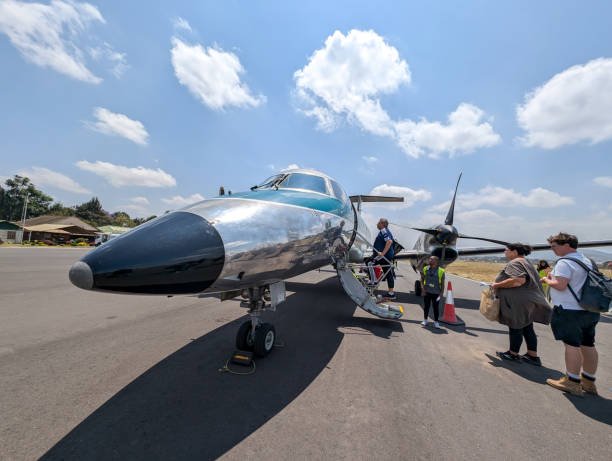
Arusha To Nairobi Flights: Prices & Booking Guide
A practical guide to navigating the air and road connections between Arusha and Nairobi, covering airport differences, booking strategies, and the shuttle bus alternative.
View package details
Best Time To Book Tanzania Domestic Flights For Lower Prices: Planning Guide
A strategic guide to finding the best value on Tanzania internal flights, balancing early booking windows with seasonal demand.
View package detailsTanzania Flight Ticket Prices: Economy Vs Safari Bush Flights Explained
A practical guide to understanding the cost and logistical differences between commercial economy flights and private-style bush flights in Tanzania.
View package detailsBest Airlines For Tanzania Safari Flights: Prices & Comparison ()
A guide to navigating Tanzania's domestic airline market for safari travel, covering reliability, baggage constraints, and booking strategies for 2027.
View package detailsZanzibar Flights During Christmas And New Year: Expert Booking & Pricing Guide
Essential guide for booking Zanzibar flights during the high-demand Christmas and New Year season, covering pricing realities, route strategy, and logistics.
View package detailsTanzania Flight Prices November : Seasonal Airfares And Booking Guide
A practical guide to understanding Tanzania flight pricing for November 2027, covering seasonal weather impacts, airport selection strategies, and booking timelines.
View package detailsTanzania Flight Prices October : Airlines & Booking Guide
A detailed guide on navigating flight prices and airline bookings for Tanzania travel in October 2027, covering international routes, domestic connections, and planning strategies.
View package detailsTanzania Honeymoon Safari And Zanzibar With Flights: Package Prices
Tanzania Honeymoon Safari and Zanzibar With Flights: Package Prices.
View package details
4-Day Tanzania Fly-In Safari With Return Flights: Prices & Planning
A deep look at the logistics and price factors for a 4-day Tanzania fly-in safari, helping you plan your 2027 wildlife adventure.
View package detailsNo related package matches those filters. Clear one or more filters to see the other topic-matched options.



