
Kuro Airstrip is the primary aviation gateway for Tarangire National Park, serving as the main landing strip for light aircraft transfers from Arusha, Zanzibar, and other safari parks. There is no single ‘standard’ price for flights to Kuro Airstrip; instead, costs are determined by whether you book a seat on a scheduled bush airline route or charter an entire aircraft for private travel. Scheduled flights are sold as part of an operator’s safari itinerary or directly via bush carriers like Coastal Aviation or Auric Air, with costs fluctuating significantly based on the season, group size, and your wider tour logistics. For 2026 and 2027 travel, expect to coordinate these flights as part of a broader package to ensure your ground transfers to the lodge are synchronized with landing times.
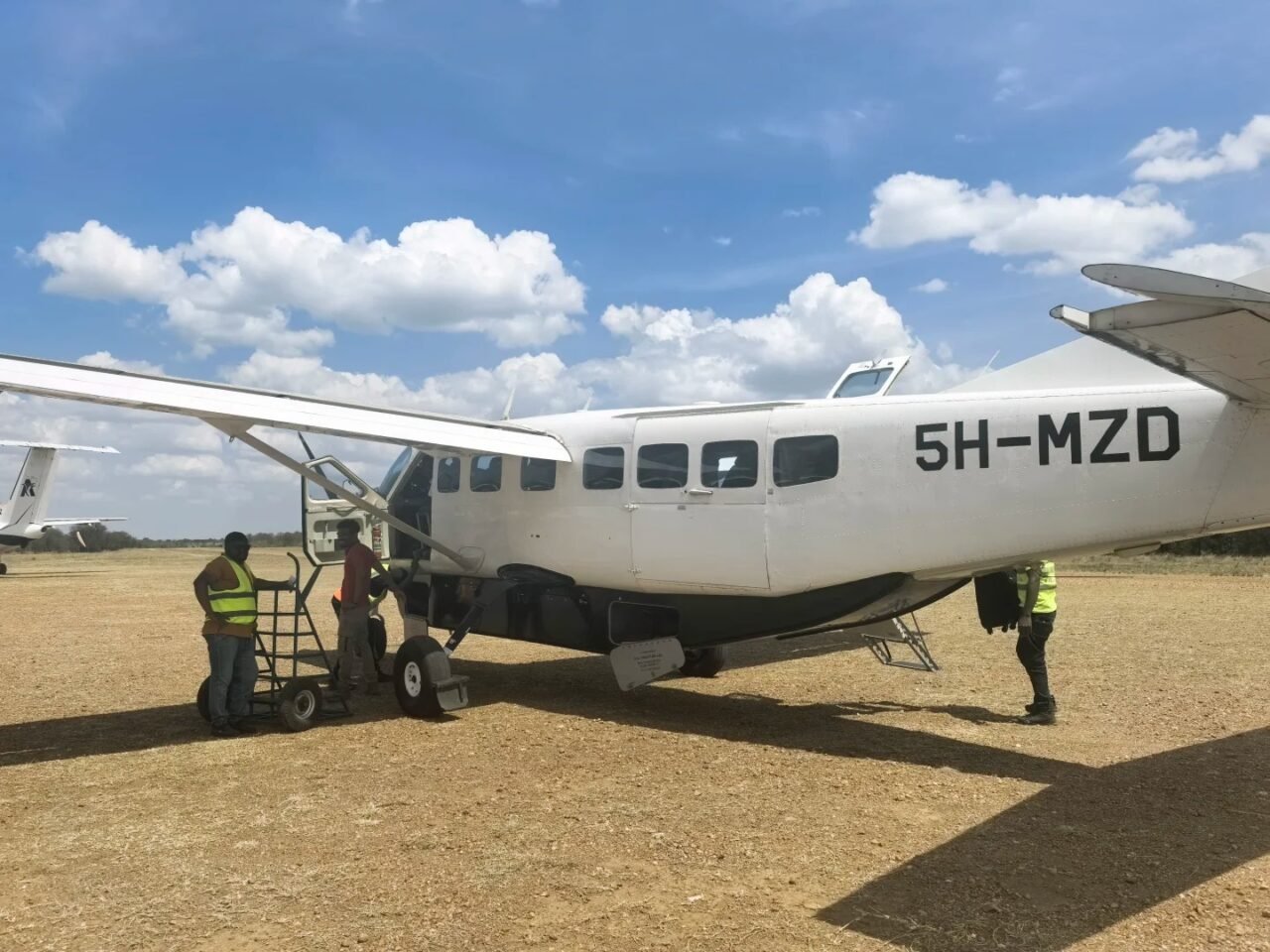
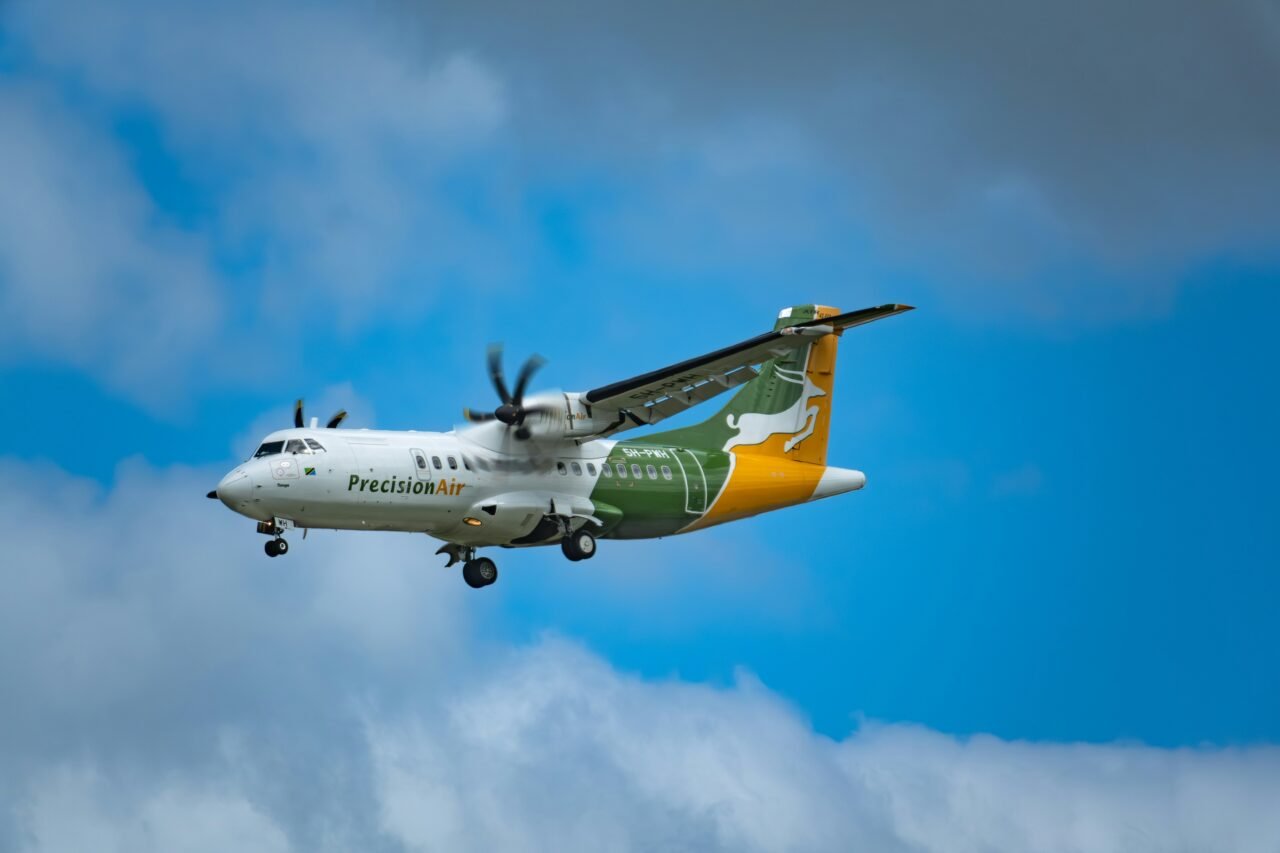
When travelers search for flights to Tarangire National Park, they are often looking for a way to maximize their time on the ground. Tarangire is unique in the Northern Circuit because it sits relatively close to Arusha—the hub of Tanzanian safari tourism. However, ‘close’ in African safari terms can still mean a three-hour drive on tarmac and dusty park roads. Choosing to fly into Kuro Airstrip changes the rhythm of your safari entirely, turning a half-day commute into a 20-minute aerial transit.
Understanding the pricing and logistics of these flights requires moving away from the mindset of commercial airline bookings. You are not buying a ticket on a website for a specific flight number; you are booking a transit service that must connect seamlessly with your safari vehicle waiting at the airstrip.
The Core Difference: Scheduled vs. Charter Flights
The most important factor in your flight budget is the distinction between a seat-rate flight and a private charter. Understanding this will help you decide whether your budget should prioritize convenience or cost-efficiency.
Scheduled ‘Seat-Rate’ Flights
These are the bush planes that operate on fixed, published schedules, often connecting multiple airstrips in a single loop (e.g., Arusha to Tarangire to Ngorongoro to Serengeti). You pay for a single seat. This is the most cost-effective way to reach Kuro Airstrip. However, the trade-off is fixed timing. If your international flight arrives late in Arusha, you may miss the last scheduled bush flight, forcing an overnight stay in the city.
Private Charter Flights
When you charter a plane, you are paying for the entire aircraft, regardless of how many seats you fill. This is expensive, but it offers total flexibility. You set the departure time. If you have a group of four or more, the per-person cost of a charter begins to look more competitive compared to seat rates, and the time saved—avoiding the early morning wait at the airport—can be substantial.
Logistics: Why the ‘Airstrip to Lodge’ Transfer Matters
The price you pay for the flight is only half the equation. A common point of friction for travelers is the ‘last mile’ of the journey. Once the plane touches down at Kuro Airstrip, you are essentially in the middle of the wilderness. Unlike a city airport, there are no taxis or Ubers waiting for you.
Your safari operator must have a vehicle and a guide waiting at the airstrip to meet your flight. This requires precise communication. If your flight is delayed due to weather (common in the rainy seasons) or air traffic control, your guide needs to be updated in real-time. This is why we strongly recommend booking your flights as part of your Tanzania safari tour package rather than attempting to piece together the flight and the ground transfer separately. Managing these logistics independently often leads to missed connections or hours of waiting at the airstrip in the heat.
Comparison: Driving vs. Flying to Tarangire
The decision to fly or drive is rarely just about money; it is about the trade-off between the experience of the landscape and the need for efficiency. The following table illustrates the typical considerations for 2026-2027 planning.
| Feature | Driving from Arusha | Flying to Kuro Airstrip |
|---|---|---|
| Travel Time | 2.5 to 3.5 hours | 20 to 30 minutes |
| Cost Structure | Included in vehicle daily rate | Per-seat or per-charter fee |
| Experience | See local villages and landscapes | Aerial view of the Great Rift Valley |
| Flexibility | High (Stop where you want) | Low (Fixed flight schedule) |
| Baggage Limits | Generous | Strict (15kg soft bags only) |
Baggage Constraints: The Hidden Cost
When booking flights to Kuro Airstrip, you must account for strict baggage weight limits. Most bush airlines limit passengers to 15 kilograms (33 pounds) per person, packed in soft-sided bags. Hard-shell suitcases are often prohibited because they cannot be squeezed into the small cargo holds of Cessna Caravans or similar light aircraft. If you are arriving from an international flight with large luggage, you will need to arrange for secure storage in Arusha or pay for an extra seat on the plane to accommodate the weight—an additional expense that can easily exceed the cost of the original ticket.
Seasonal Impacts on Flight Reliability
Tanzania’s seasons dictate more than just wildlife sightings; they dictate flight safety and operational capacity. During the dry season (June to October), flight schedules are dense, and airstrips are generally in perfect condition. Demand is high, and booking 6–9 months in advance is essential to secure seats on your preferred routes.
During the rainy seasons (November and April/May), flight schedules can be erratic. While Kuro Airstrip is generally well-maintained, heavy rainfall can lead to temporary closures or delayed departures. If you are planning travel during these shoulder months, it is vital to have a flexible itinerary. We often advise clients to keep their first night of the safari in a lodge accessible by road if there is any doubt about flight reliability, though in practice, bush pilots are remarkably skilled at navigating around localized weather.
Planning Your 2026-2027 Safari Transit
As you look toward your travel dates in 2026 or 2027, start by mapping out your full route. Are you combining Tarangire with a Kilimanjaro climb? If so, you will likely be flying from Arusha or Kilimanjaro International Airport (JRO). If you are coming from Zanzibar, you will likely fly into Kuro Airstrip directly, bypassing Arusha entirely.
The complexity of these connections is why we exist as a local operator. We handle the scheduling of your flight to align with your internal park entry permits and lodge check-in times. When you are ready to finalize your plans, we need to know:
- Your preferred travel dates (or the window you are considering).
- The number of travelers in your party (this determines if a charter is cost-effective).
- Your total baggage expectations (so we can plan for extra seats if necessary).
- Your planned start and end points for the broader safari.
For personalized advice on how to route your flights and to get a transparent quote for your 2026 or 2027 trip, reach out to our team directly. You can contact us via WhatsApp at +255 747 477 898, or send your itinerary requirements to climb4africa@gmail.com or our backup email at info@climb-4-africa.com. We can help you weigh the cost of flying versus driving and ensure your entire transit is handled by local experts who understand the nuances of the Northern Circuit.
Why We Recommend Integrating Flights
Travelers often ask if they can book the flights themselves to save money. While technically possible, it introduces a significant risk factor: the disconnect between the airline and the ground operator. When we package your flight into your tour, we take responsibility for the connection. If a flight is delayed, we are the ones coordinating with the lodge, the pilot, and your driver. In the middle of the Tanzanian bush, that coordination is worth far more than the nominal savings of booking a flight independently. Whether you are aiming for the luxury of a private charter or the efficiency of a scheduled seat, our role is to ensure that the logistics remain invisible, allowing you to focus on the game drives and the landscape.
The Aerial Approach: Navigating the Kuro Airstrip Landing Experience
Arriving at Kuro Airstrip is, for many, the true beginning of the safari experience. Unlike the sterile, controlled environment of a commercial international airport, landing at Kuro is an visceral introduction to the Tarangire ecosystem. The airstrip itself is essentially a graded, compacted dirt or gravel runway carved directly into the savannah. Understanding the operational reality of this landing zone is crucial for travelers trying to gauge whether the cost of a flight is worth the experience, as it dictates the very first moments of your time in the park.
When your light aircraft descends toward Kuro, you are not merely arriving at a destination; you are performing an aerial game drive. Pilots often circle the airstrip before landing to ensure the runway is clear of wildlife—a common occurrence in Tarangire, where herds of elephants or pods of zebras frequently congregate on the open, flat ground of the airstrip. This is not a delay; it is a feature of the journey. The cost of your flight essentially covers this integrated wildlife viewing opportunity. If you were driving from Arusha, you would be traversing busy transit roads and small towns for hours before seeing your first animal. By flying, you transition from the altitude of the clouds to the height of the giraffe within minutes.
Operational Realities of Remote Airstrips
The pricing of flights to Kuro Airstrip reflects the maintenance and operational challenges inherent in keeping a remote bush airstrip functional. These strips are not managed by national aviation authorities in the same way major airports are; they are maintained by the Tanzania National Parks Authority (TANAPA) and the aviation companies that rely on them. The fees that airlines pay to utilize these strips—which are ultimately factored into your ticket price—contribute to the upkeep of the runway surface, which must be kept free of debris, large rocks, and animal burrows that could compromise a landing gear during the touchdown of a Cessna Grand Caravan or a similar light aircraft.
Furthermore, because Kuro Airstrip is located within the park, there is no terminal building in the traditional sense. You will not find baggage carousels, duty-free shops, or climate-controlled waiting lounges. Instead, your “terminal” is a shaded area or, more often, the side of your safari vehicle. This logistical simplicity is exactly why we emphasize the importance of having a driver-guide waiting for you. When you step off the plane, you are immediately entering the bush. If your ground transfer is not synchronized perfectly with your flight arrival, you are not waiting in a cafe; you are waiting in an open environment where park rules strictly prohibit walking around freely. The price of your flight is therefore tied to the reliability of the ground operator who ensures that your transfer vehicle is parked and ready the moment your propeller stops spinning.
The Impact of Aircraft Type on Pricing
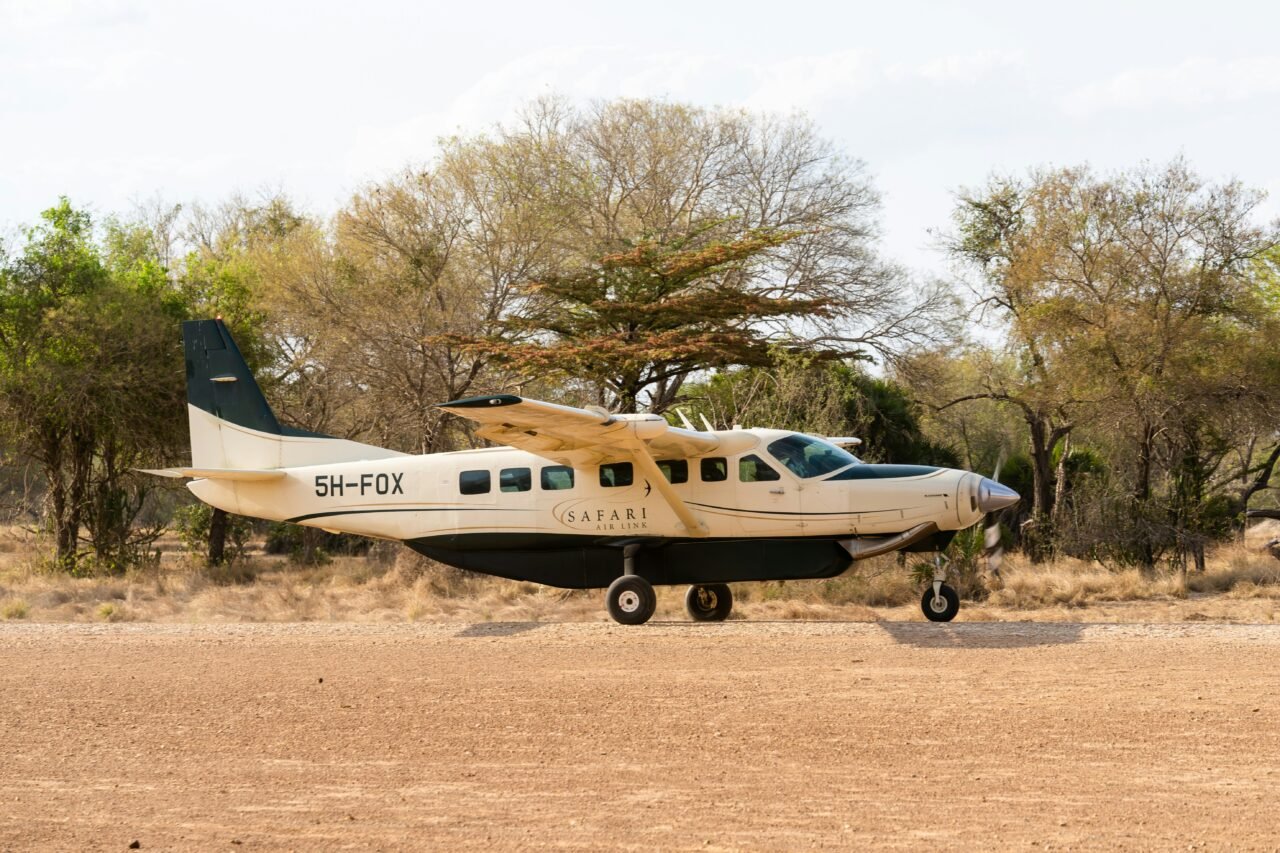
Not all flights to Kuro Airstrip are priced equally, even within the scheduled seat-rate category, because the aircraft type varies based on passenger volume and airline fleet capacity. Most scheduled bush flights utilize single-engine turboprops, such as the Cessna Grand Caravan. These are the workhorses of the Northern Circuit, designed for short takeoffs and landings on unpaved surfaces. They offer a rugged, “bush” experience that is loud, exciting, and intimate. However, some operators may utilize twin-engine aircraft for longer routes or when connecting multiple parks.
The cost variance between these aircraft types is often negligible to the passenger, but the comfort and reliability differ. Twin-engine aircraft generally offer a smoother ride and better performance in adverse weather conditions, which can be a factor during the rainy seasons. If you are particularly sensitive to motion or noise, you might inquire about the fleet being used for your route. While you cannot always dictate the aircraft type on a scheduled seat-rate flight, understanding that your fare supports the maintenance of these specialized machines helps contextualize the “high” cost compared to commercial jet travel. You are paying for a specialized machine that is designed to traverse the most challenging terrain in East Africa safely.
Environmental and Seasonal Variables in Flight Costs
The price of your flight to Kuro can also be influenced by the environmental conditions of the park, which fluctuate dramatically throughout the year. During the dry season (June to October), visibility is excellent, and landings are generally routine. However, the dust can be intense. Airlines must perform more frequent engine maintenance and filter changes during these months to prevent damage from the fine, volcanic dust that characterizes the Tarangire landscape. These increased maintenance costs are a hidden component of the annual flight pricing structure.
Conversely, during the green season (November to May), the primary challenge is mud and localized flooding. While the airstrip is designed to drain well, persistent heavy rains can occasionally render it unusable for short periods. When flights are diverted or cancelled due to runway conditions, the airline incurs significant costs for rescheduling, repositioning aircraft, and providing ground transport alternatives. When you book a flight, you are essentially purchasing a “reliability premium” that covers the airline’s ability to manage these operational risks. While no one wants a cancellation, the cost of your flight reflects the airline’s commitment to maintaining a safety-first culture in an environment where the infrastructure is at the mercy of the elements.
Navigating the ‘Hidden’ Fees: Taxes, Levies, and Regulatory Surcharges
When analyzing the cost of a flight into Kuro Airstrip, travelers often focus exclusively on the base fare—the advertised “seat-rate” or charter quote. However, the final invoice is rarely a flat figure. A significant portion of your payment is composed of mandatory regulatory fees, park access levies, and infrastructure surcharges that are rarely itemized in initial marketing materials. Understanding these components is critical for accurate budgeting, as they can add anywhere from 15% to 30% to the base cost of your flight.
The most prominent of these is the Airstrip Landing Fee. Unlike commercial airports where landing fees are typically absorbed into the ticket price by the airline, bush operations in Tanzania often bill these separately or mandate that the operator collect them on behalf of the Tanzania National Parks Authority (TANAPA). Kuro Airstrip, being situated within the park boundaries, requires a specific landing fee for every aircraft movement. Because these fees are set by the governing authority and not the airline, they are subject to sudden adjustments based on government policy. When you book your flight, ensure your quote specifies whether these fees are inclusive or exclusive; a quote that appears cheaper than the market average often excludes these mandatory park-access costs.
Furthermore, you will encounter the Passenger Service Charge (PSC). While common in international aviation, the application of PSC in remote bush airstrips is distinct. This fee contributes directly to the maintenance of the airstrip itself—the grading of the runway, the clearing of vegetation, and the upkeep of the basic windsock and safety markers. Travelers often assume these airstrips are government-maintained infrastructure provided for free, but in reality, bush operators and lodge consortia often subsidize the ongoing maintenance of Kuro Airstrip to ensure it remains operational. Your ticket price essentially acts as a micro-contribution to the upkeep of the very infrastructure that allows your safari to proceed without a multi-hour drive.
Another variable often overlooked is the Fuel Surcharge. Because aviation fuel must be trucked into remote locations like Tarangire, the volatility of global oil prices is amplified by the logistical cost of overland transport. If the price of diesel or Jet A-1 fuel spikes, airlines may implement a fuel surcharge retroactively, even after a booking is confirmed, depending on the terms and conditions of your operator. It is standard practice to review the “force majeure” or “price adjustment” clauses in your flight contract. These clauses are designed to protect the airline from sudden, uncontrollable spikes in operational costs, ensuring that they can continue to fly safely without cutting corners on fuel quality or maintenance.
The ‘Dead-Leg’ Factor in Private Charter Pricing
If you choose to bypass scheduled services in favor of a private charter, your pricing model changes from a per-seat calculation to a per-flight-hour calculation. This introduces the concept of the “dead-leg” or “ferry flight” fee, which is arguably the most significant factor in private aviation costs that travelers fail to anticipate.
A private charter aircraft is rarely based at Kuro Airstrip. It is typically based at Arusha Airport or Julius Nyerere International Airport in Dar es Salaam. When you hire a charter, you are not just paying for the flight time from your point of origin to Tarangire; you are paying for the aircraft to get to you and the aircraft to return to its base. If you fly from Arusha to Kuro, the aircraft must fly from its base to Arusha (or start there), fly you to Tarangire, and then, if the aircraft is not booked for a return trip, it must fly empty back to its base. You are almost always paying for the full round-trip operational cost of the aircraft, regardless of whether you are on board for all those legs.
To mitigate this, savvy travelers coordinate their charters with “repositioning” opportunities. If an operator has a flight scheduled to drop passengers off at a nearby park like Manyara or Ngorongoro, they may offer you a discounted rate to pick you up from Kuro because the aircraft is already “in the neighborhood.” This requires flexibility. If your itinerary is rigid, you will almost certainly pay for the full ferry flight. When requesting quotes for a private charter, explicitly ask: “Is this price inclusive of the repositioning costs, or is the aircraft already positioned at my departure point?” The difference in price can be substantial, sometimes effectively doubling the cost if you are the one paying for the aircraft to move from a distant hub just to accommodate your specific schedule.
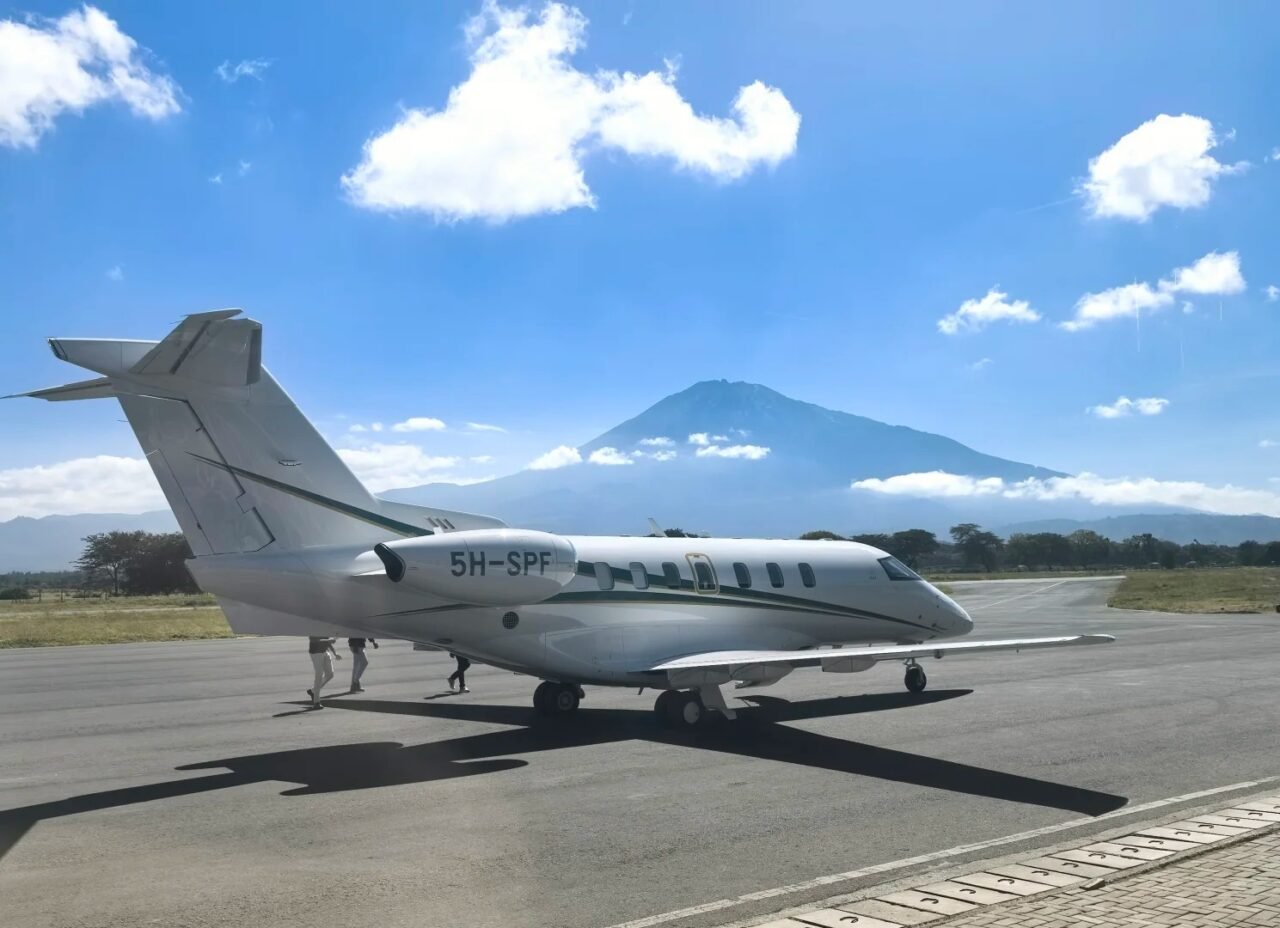
Finally, consider the weight and balance limitations of charter aircraft. While this is a logistical constraint, it is also a financial one. Private charters are priced by the aircraft, but they are also limited by payload. If your group is large or your luggage is substantial, you may be forced to upgrade to a larger aircraft class—a Pilatus PC-12 instead of a Cessna Caravan, for example. This jump in aircraft size is not just a comfort upgrade; it is a significant shift in the hourly operating rate. When planning your charter, provide accurate passenger weights and luggage dimensions early. Choosing an aircraft that is too small for your actual needs can lead to last-minute, expensive “payload penalties” where you are forced to charter a second aircraft for excess baggage—a cost-prohibitive error that can easily be avoided with precise pre-flight communication.
The ‘Airstrip as Safari’ Paradox: Managing Wildlife Expectations Upon Arrival
The transition from the sky to the savanna at Kuro Airstrip is often marketed as the start of your safari, but it is critical to calibrate your expectations regarding wildlife sightings the moment your wheels touch the tarmac. Unlike a dedicated game drive vehicle that can traverse hundreds of kilometers of park roads in search of elusive predators, the flight experience is purely logistical. The airstrip itself is a functional piece of infrastructure, not a controlled wildlife enclosure. While Tarangire is famous for its massive elephant herds and baobab-studded landscapes, the immediate vicinity of the airstrip is subject to the same unpredictable rhythms of nature as the rest of the park.
Travelers often mistakenly assume that because they are landing “in” the park, the game viewing begins immediately upon exiting the aircraft. While it is true that elephants, impala, and occasionally lions are spotted near the runway, these sightings are serendipitous. The aviation safety regulations governing Kuro Airstrip strictly prohibit passengers from wandering away from the designated arrival area. You are effectively contained within a small, secure zone until your ground transfer vehicle arrives. This period, which can range from five minutes to half an hour depending on your lodge’s proximity, is not a game drive. It is a waiting period. Viewing wildlife from the airstrip fence line is possible, but it is not a substitute for a professional game drive conducted by a guide who knows how to read the landscape and track animal movements.
The Distinction Between Transit and Game Viewing
There is a fundamental difference between the “aerial transit” phase of your journey and the “game drive” phase. When you book a flight to Kuro, you are paying for speed and comfort, not a safari activity. The pilots operating these routes are highly skilled aviators, but they are not safari guides. They do not circle the aircraft to give you a better view of a cheetah, nor do they deviate from their flight paths to chase sightings. Their primary responsibility is the safe navigation of the aircraft and adherence to strict flight schedules. Attempting to treat the flight as an aerial tour often leads to frustration; the aircraft flies at altitudes and speeds that make detailed wildlife observation impossible, and the noise of the engine inevitably alerts animals, causing them to move away before you can get a clear look.
Furthermore, the logistical reality of the airstrip arrival means you may be sharing the landing area with other travelers. This is a “transit hub,” not a private reserve. During the peak season, multiple aircraft may land within a short window. The airstrip personnel focus on coordinating ground transfers, offloading luggage, and managing the rapid turnaround of aircraft. This environment is inherently busy and loud, which is antithetical to the quiet, stealthy approach required for high-quality wildlife viewing. Expecting a tranquil, private wildlife encounter the moment you step off the plane is a recipe for disappointment. The real magic of Tarangire begins when you have cleared the airstrip, boarded your designated 4×4 safari vehicle, and your guide has engaged the low-range gears to head into the bush.
Why Your Lodge Transfer is the First True Game Drive
The true safari experience begins when the airstrip fades into the distance and you are in a vehicle with a guide. This is the moment where the “transfer” becomes a “game drive.” Because you have saved hours of driving time by flying into Kuro, you have the luxury of turning the short commute to your lodge into a productive excursion. This is the time to ask your guide about the recent sightings in the area, the movement of the elephant herds, and the current state of the Tarangire River. Unlike the arrival transit, the drive from the airstrip to your lodge allows for stops, photo opportunities, and the flexibility to deviate from the main track if your guide spots something of interest.
It is important to communicate with your lodge regarding the timing of your flight arrival. If you land at midday—the hottest part of the day when wildlife activity is at its lowest—do not expect the drive to the lodge to be packed with sightings. Animals in Tarangire, particularly the large cats, often seek shade during these hours. If your goal is to maximize wildlife viewing, you might consider flights that arrive in the early morning or late afternoon, when the temperature is cooler and the animals are more active. However, this must be balanced against the flight schedules of the bush airlines, which are often dictated by weather conditions and the need to connect multiple parks in a single route.
Operational Constraints on Wildlife Photography
Photographers frequently inquire about the possibility of “aerial photography” during the approach to Kuro Airstrip. While the descent into Tarangire offers spectacular views of the baobab forests and the river valley, the practicalities of small aircraft travel make high-quality photography extremely difficult. The windows on Cessna Caravans and other light aircraft are often small, tinted, and not designed for clear, unobstructed shooting. Additionally, the vibration of the engine and the constant movement of the aircraft create significant challenges for capturing sharp images. Relying on the flight into Kuro as a photographic opportunity is generally discouraged. Instead, view the flight as a means to an end—a way to preserve your energy and time for the high-quality, ground-based photography that Tarangire is world-renowned for. Save your camera batteries and memory card space for the game drives, where you have the stability and proximity to capture the wildlife that defines this incredible ecosystem.
The ‘Transit Day’ Trade-Off: Weighing the Costs of Aerial vs. Ground Travel
Choosing between flying into Kuro Airstrip and opting for a ground transfer is rarely a decision based solely on financial cost. It is a strategic choice that fundamentally alters the texture of your safari experience. When evaluating the ‘travel day,’ travelers must weigh the logistical efficiency of air transit against the in-depth, albeit slower, nature of driving. This decision is often governed by personal energy levels, the amount of equipment being transported, and the specific rhythm you wish to establish for your safari.
The Psychological Shift: Immersion vs. Efficiency
The primary advantage of a ground transfer is the gradual transition from the urban environment of Arusha into the wilderness of the Northern Circuit. Driving allows for a sensory acclimation; the landscape shifts from developed areas to rural agricultural zones, eventually giving way to the scrubland and baobab-dotted vistas of Tarangire. This slow progression provides a psychological ‘buffer’ that many travelers find helpful for unwinding. It is a tactile experience where you witness the change in local life, road conditions, and vegetation density.
Conversely, flying into Kuro Airstrip offers a stark, abrupt entry. You are essentially teleported from an airstrip terminal into the heart of the park. While this maximizes your time within the game reserve, it requires a mental gear-shift. You land, meet your guide, and are immediately expected to engage with the safari environment. For travelers arriving after long-haul international flights, the flight into Kuro is often the preferred option not just for speed, but for comfort. The physical toll of several hours on uneven road surfaces can be significant, potentially leaving you fatigued before your first game drive even begins. If your goal is to hit the ground running with maximum energy, the flight is the superior tactical choice.
Luggage Limitations as a Strategic Decision
One of the most overlooked factors in the flight-versus-drive debate is the strict baggage policy inherent to light aircraft. Bush airlines operating into Kuro Airstrip have stringent weight limits, typically capping luggage at 15 kilograms per person, and almost universally requiring soft-sided bags. These restrictions are not merely guidelines; they are operational necessities dictated by the small payload capacity of Cessna Caravans and similar aircraft. If your safari itinerary includes photography equipment, specialized lenses, or multiple changes of gear for varying climates, the flight option introduces a logistical bottleneck.
Travelers opting for a ground transfer enjoy significantly more flexibility regarding luggage. While vehicles still have space constraints, they are far more forgiving than a light aircraft. If your safari involves an extended stay or requires bulky items that do not compress into soft-sided duffels, the road option eliminates the stress of repacking or paying for excess weight, which is rarely an option on scheduled bush flights. When planning, assess your gear requirements early; if you are unwilling to compromise on your equipment, the logistical freedom of a private vehicle may outweigh the time saved by flying.
Weather and Reliability: The Unpredictability Factor
Both modes of transit are subject to environmental variables, though the nature of these delays differs. Flying into Kuro is highly dependent on visibility and wind conditions. During the rainy season, or even during periods of heavy morning fog, flight schedules can be disrupted. Bush pilots operate under strict Visual Flight Rules (VFR), meaning they cannot fly if visibility is compromised. This can lead to delays or, in rare instances, the need to reroute flights to different airstrips, requiring a longer ground transfer than originally planned.
Driving, while less prone to total cancellation, is susceptible to road conditions. Tarangire’s park roads can become challenging during the wet season, with mud and erosion affecting transit times significantly. However, a vehicle is generally more resilient to weather fluctuations than a light aircraft. When choosing your transit method, consider the time of year. If you are traveling during the peak of the rainy season, you must be prepared for the reality that the ‘quick’ flight might be delayed by weather, or the ‘reliable’ drive might be slowed by road conditions. Maintaining a buffer in your itinerary—avoiding tight connections on your arrival and departure days—is the most effective way to mitigate the inherent unpredictability of remote African travel.
The Strategic Nexus: Coordinating Accommodation and Airstrip Access
While the flight to Kuro Airstrip is often treated as a standalone logistical hurdle, it is inextricably linked to the specific location of your accommodation within Tarangire National Park. The park spans over 2,850 square kilometers, and the airstrip is not centrally located in a way that makes all lodges equally accessible. Pricing your transit effectively requires understanding that the ‘Kuro Airstrip Price’ is essentially a two-part equation: the cost of the airfare and the cost of the subsequent lodge transfer. Miscalculating the distance between the airstrip and your chosen camp can lead to significant cost inflation, as remote lodges often levy higher transfer fees due to fuel consumption and wear on vehicles navigating the park’s rugged terrain.
Travelers often assume that once they land at Kuro, they are effectively at their destination. However, lodges located in the southern or eastern sectors of the park—areas often preferred for their seclusion and lower density of tourist vehicles—may require a game-drive transfer lasting two to three hours. This transit is not merely a taxi service; it is a game drive that enters the park’s official transit fee structure. If you have booked a fly-in package, confirm whether the transfer fee is inclusive of park entry for that day. If you arrive early in the morning, your transfer might count as your first full day of game viewing, necessitating a park fee payment that you may not have budgeted for if you assumed the flight was the only “entry” cost. Conversely, lodges situated in the northern corridor near the main gate or the Kuro area itself offer lower transfer costs, making them more budget-friendly for travelers who are strictly optimizing for the lowest total transit expense.
The Impact of Accommodation Type on Transfer Logistics
The style of your accommodation—ranging from permanent luxury lodges to seasonal tented camps—also dictates the reliability and cost of your airstrip pick-up. High-end, permanent lodges typically operate their own fleet of 4×4 safari vehicles and maintain dedicated drivers who monitor flight arrival times in real-time. This provides a level of certainty; if your flight is delayed by an hour due to weather, the lodge is usually capable of adjusting their schedule without an additional charge. These operators integrate the cost of the transfer into the overall nightly rate or package, masking the individual “Kuro Airstrip to Lodge” price but ensuring smooth execution.
In contrast, travelers opting for smaller, seasonal tented camps or those booking independent safari packages may find that transfers are outsourced to third-party transport companies. In these instances, the transfer fee is often a separate, variable cost. If you are flying into Kuro, you are essentially at the mercy of the transport provider’s scheduling. If the driver is servicing multiple lodges or managing guests arriving on different flights, you may face significant waiting times at the airstrip. This creates a hidden “cost” in terms of lost time—precious hours that could have been spent on a game drive. When negotiating your booking, inquire specifically about whether the transfer is “dedicated” or “shared.” A dedicated transfer, while more expensive, prevents the scenario where you are sitting on your luggage at the airstrip waiting for a vehicle to drop off other passengers at a different camp before circling back to collect you.
Maximizing Value: The ‘Fly-In’ Package vs. ‘A La Carte’ Booking
For the budget-conscious traveler, the temptation to book flights separately from accommodation is strong, but this often leads to a failure in synchronization. When you book a “fly-in” package through a tour operator, the operator assumes the liability for the connection. If the flight is cancelled or the landing time shifts, the operator is responsible for rebooking the ground transfer. If you book the flight and the lodge separately, you become the project manager of your own logistics. If your flight lands at 11:00 AM but your transfer vehicle is scheduled for 1:00 PM based on a previous itinerary, you are stranded at the airstrip. While Kuro has basic facilities, it is not designed for long-term waiting. There is no restaurant, no climate-controlled lounge, and limited shelter from the equatorial sun. The “price” of saving money by booking separately can manifest as a day of extreme discomfort or the cost of hiring an emergency taxi, which can be exorbitant in a remote park environment.
Furthermore, many lodges offer “fly-in” specials during the shoulder and green seasons. These packages often bundle the flight, the transfer, and the accommodation at a rate lower than the sum of their parts. These promotions are designed to fill seats on bush planes and beds in lodges simultaneously. Before finalizing your travel budget, ask your agent if any regional bush airlines are currently partnering with your preferred lodges. This is often the most effective way to reduce the total cost of your Kuro Airstrip transit without sacrificing the quality of the transfer vehicle or the reliability of the pick-up service.
Navigating the Variable Costs of ‘Multi-Leg’ Safari Circuits
While the focus often remains on the direct flight to Kuro Airstrip, the pricing structure for bush aviation is rarely isolated. Most travelers visiting Tarangire are not flying solely from Arusha; they are integrating Kuro into a broader Northern Circuit itinerary that includes Serengeti, Manyara, or Ngorongoro. Understanding how these multi-leg routes influence the pricing of your Kuro Airstrip flight is essential for budget management. When you book a multi-stop circuit, you are essentially purchasing a ‘milk run’ ticket. In bush aviation, the cost of a flight is heavily subsidized by the number of passengers and the efficiency of the aircraft’s route. If your flight path is Arusha to Manyara, then to Kuro, and finally to the Serengeti, you are occupying a seat on an aircraft that is maximizing its utility across multiple airstrips.
This multi-leg reality introduces a specific pricing phenomenon: the ‘circuit discount.’ Airlines often price these bundled legs lower than the sum of individual point-to-point tickets. However, this comes with a trade-off in flight duration. A direct charter from Arusha to Kuro might take 20 minutes, whereas a scheduled multi-leg flight could take two hours, as the aircraft descends and ascends at intermediate strips. When analyzing quotes, clarify whether the ‘flight cost’ is for a direct transit or a multi-stop circuit. If you are paying a premium for a scheduled flight, you should be aware of how many intermediate stops are scheduled before your arrival at Kuro. Some operators might market a ‘direct’ flight that is actually a multi-stop route with brief ‘touch-and-go’ landings, which can impact your arrival time and, consequently, the timing of your game drive transfer.
The Economics of Aircraft Seating Capacity and Weight Restrictions
The pricing of light aircraft transfers is inextricably linked to the physics of aviation. Unlike commercial airliners where baggage fees are an add-on, bush flights treat luggage weight as a primary variable in the aircraft’s operational cost. When you look at the price of a seat on a Cessna Caravan or a smaller six-seater aircraft, that price is calculated based on an assumed average weight per passenger, including luggage. If your group exceeds the standard weight allowance, you may be forced to purchase an ‘extra seat’—not because you need the physical chair, but because the aircraft cannot legally or safely take off with the added weight of your gear. This ‘extra seat’ charge is a significant, often overlooked, component of the total transit cost to Kuro Airstrip.
This is particularly relevant for professional photographers or travelers with specialized equipment. A standard 15-kilogram soft-sided luggage allowance is the industry norm for bush flights. If your camera gear pushes your total weight to 30 kilograms, you are effectively doubling your weight profile. Operators will often charge the equivalent of a full seat rate to accommodate this, effectively turning a single-person transfer into a double-price transaction. Before finalizing your flight budget, calculate your total gear weight with extreme precision. It is often more cost-effective to ship non-essential items directly to your lodge via road transfer services while flying light, rather than paying for an additional seat on the aircraft.
Fuel Surcharges and Operational Transparency
In the current aviation climate, fuel price volatility is a significant factor in bush flight pricing. While commercial airlines hedge fuel costs months or years in advance, smaller bush operators are more susceptible to immediate market fluctuations. When reviewing a quote for your Kuro Airstrip flight, check for the inclusion of a ‘fuel surcharge’ line item. Some operators include this in the base fare, while others apply it as a variable cost that can shift closer to your departure date. This is a common source of friction between travelers and operators, as a flight booked six months in advance may have a different fuel surcharge applied upon final payment.
To mitigate this, ask for a ‘fixed-price guarantee’ or a clear statement on how fuel surcharges are handled. Reputable operators will often provide a price that is inclusive of all current levies, including the specific landing fees charged by the Tanzania National Parks Authority (TANAPA) for using Kuro Airstrip. Landing fees are not always included in the airline ticket price; sometimes they are collected by the lodge or the tour operator on the ground. Ensure that you are not paying for these fees twice—once to the airline and once to your ground handler. A transparent breakdown of the flight cost should clearly delineate the airfare, the fuel surcharge, the landing fee, and any administrative taxes. If an operator is unwilling to provide this level of detail, it is a red flag that the pricing may be inflated by hidden ‘convenience’ fees.
The ‘Empty Leg’ Opportunity in Private Charters
For those considering the private charter route, the cost can be significantly reduced by monitoring ’empty legs.’ An empty leg occurs when a private aircraft is booked for a one-way trip, and the operator needs to return the plane to its base or position it for a subsequent charter. If you are flexible with your travel dates and times, you can occasionally secure a private charter at a fraction of the standard rate. This is not a guaranteed strategy, and it requires working closely with a charter broker who has visibility into the flight schedules of multiple operators across the Northern Circuit.
Using an empty leg to fly into Kuro Airstrip can offer the luxury of a private flight without the prohibitive cost of a full round-trip charter. However, this strategy requires a high degree of flexibility. You may find an empty leg that perfectly matches your route, but it might be scheduled for 6:00 AM or 4:00 PM, which may not align with your lodge’s check-in or game drive schedule. Furthermore, these flights are subject to cancellation if the primary charter that created the empty leg is changed or cancelled. It is a high-reward, high-risk strategy best suited for travelers who view the transit as part of the adventure rather than a rigid logistical requirement.
Seasonal Migration Dynamics and Flight Scheduling
While the logistics of flying into Kuro Airstrip are often discussed in terms of operational efficiency and cost, there is an often-overlooked variable that should dictate your flight timing: the seasonal movement of wildlife within the Tarangire ecosystem. Tarangire is defined by its dramatic seasonal shifts, primarily driven by the availability of water. During the dry season—typically spanning from June to October—the Tarangire River becomes the lifeblood of the park, drawing massive herds of elephants and plains game from the surrounding Maasai Steppe. During these months, the airstrip itself can become an extension of the game viewing experience, but this influx of wildlife also creates unique operational considerations for bush pilots.
When you book a flight into Kuro during the peak dry season, you are arriving at a time when wildlife density around the airstrip is at its highest. Pilots often execute low-level approaches to survey the runway for herds of elephants or buffalo that may have wandered onto the landing strip. This is not merely a safety precaution; it is a standard operational reality in Tarangire. If a herd is occupying the runway, the pilot will typically perform a low pass to encourage the animals to move, circling back for a second approach. This process can add 10 to 15 minutes to your arrival time. Travelers should factor this into their planning, particularly if they have tight connections with onward ground transfers or afternoon game drive departures.
The Impact of ‘Green Season’ Visibility and Flight Reliability
Conversely, the ‘Green Season’ (November to May) presents a different set of challenges. As the rains transform the park, wildlife disperses into the wider ecosystem, and the dense vegetation changes the visual landscape for pilots. While the airstrip is less likely to be occupied by large herds during this period, the meteorological conditions are far more volatile. Thunderstorms, low cloud ceilings, and heavy localized rainfall can lead to sudden flight cancellations or diversions. Unlike larger commercial airports with sophisticated instrument landing systems, Kuro Airstrip relies heavily on visual flight rules (VFR). If visibility drops below a certain threshold, the airstrip effectively closes.
This reality necessitates a more flexible mindset regarding your transit schedule. During the rainy months, it is advisable to avoid scheduling your flight to Kuro on the same day you have a strict international flight connection out of Kilimanjaro International Airport (JRO) or Arusha Airport (ARK). The risk of a weather-related delay is non-negligible, and a three-hour delay in the bush can cascade into a missed international departure. Experienced safari planners often recommend a ‘buffer night’ in Arusha at the end of the safari, even if the flight to Kuro is only a short hop, to insulate against the inherent unpredictability of bush aviation during the transition seasons.
Aligning Arrival Times with Wildlife Activity Patterns
Beyond weather and safety, there is the question of the ‘Golden Hour’ arrival. Many travelers prioritize morning flights, hoping to land at Kuro by 10:00 AM to maximize their first day. While this makes logistical sense, it is worth noting that the middle of the day in Tarangire—roughly 11:30 AM to 3:00 PM—is when wildlife activity typically wanes as animals seek shade. If your flight lands during this window, your transfer from the airstrip to your lodge may feel quieter in terms of sightings. Some seasoned safari-goers prefer arriving in the late afternoon, around 3:30 PM or 4:00 PM. This timing allows for a ‘transfer-as-game-drive’ experience that coincides with the awakening of the bush, as predators become more active and herbivores begin moving toward water sources for the evening. If you have the flexibility to choose your flight time, coordinate with your lodge to see if they can accommodate a late-afternoon arrival, effectively turning your transfer into a productive game viewing session rather than a mere logistical transit.
The Mechanics of Airstrip Access: Coordinating Guides and Vehicle Logistics
The transition from the tarmac of a light aircraft to the open-sided safari vehicle is a moment of profound operational complexity that is often invisible to the traveler. When you book a flight to Kuro Airstrip, you are not merely purchasing a seat on a plane; you are initiating a synchronized dance between aviation logistics and ground-based safari operations. Because Kuro Airstrip is situated within the park boundaries, it is subject to strict Tanzanian National Parks (TANAPA) regulations regarding vehicle movement and visitor conduct. Understanding these mechanics is essential for ensuring that your arrival is smooth and that your guide is positioned correctly to meet you.
Most lodges and safari operators utilize a centralized dispatch system to monitor flight manifests. Even if you have booked your flights independently, your ground operator must be notified of your specific flight carrier, arrival time, and passenger count at least 48 hours in advance. This is not just for convenience; it is a regulatory requirement for park entry. Your guide must register their vehicle and your arrival details with the park authorities at the main gate or the designated airstrip office. If your flight is diverted or delayed, your operator must manually update these entry logs. Failure to do so can result in significant administrative hurdles, potentially delaying your departure from the airstrip as the guide negotiates entry permissions.
The Role of the ‘Meet and Greet’ at Kuro
Unlike major international airports where you navigate to a taxi rank or a pre-arranged shuttle, the ‘meet and greet’ at Kuro Airstrip is an intimate, high-stakes affair. The airstrip is essentially a cleared patch of bush. There are no arrival halls, no luggage carousels, and no signage. Your vehicle will be waiting on the perimeter of the runway. The logistical challenge here lies in the visibility of your guide. In the high season, multiple aircraft may land in quick succession, creating a flurry of activity. It is standard practice for your guide to display a sign with your name or the name of your lodge, but in the dust and heat of the Tarangire afternoon, this can be difficult to spot. It is highly recommended that you confirm the make, model, and registration number of your safari vehicle with your operator before you depart your previous location. Knowing that you are looking for a white Toyota Land Cruiser with a specific pop-up roof configuration makes the identification process significantly faster.
Navigating Park Entry Fees and Vehicle Permits
One of the most common points of friction during the Kuro arrival is the processing of park entry fees. While many all-inclusive safari packages bundle these costs into the total price, independent travelers or those on mixed-itinerary trips may find themselves needing to handle this at the gate. If your guide has to stop at the Tarangire Main Gate or the Kuro Airstrip office to process your entry permits upon your arrival, this can add 30 to 60 minutes to your transfer time. This is ‘dead time’—time spent waiting in a vehicle while your guide navigates bureaucratic paperwork. To mitigate this, ensure your operator has pre-registered your entry. If you are staying at a lodge located deep within the park, your guide will often have a pre-arranged permit system that allows them to bypass the main gate congestion, streamlining your transition from the airstrip to your first game drive.
Luggage Transfer and Vehicle Capacity
The logistical bottleneck of flight travel to Kuro often manifests in the trunk of your safari vehicle. Bush aircraft have strict weight limits (typically 15kg in soft-sided bags), but safari vehicles also have finite storage space. If you are traveling as part of a group, or if you are sharing a transfer vehicle with other lodge guests, the accumulation of luggage can become a logistical hurdle. Safari vehicles are designed for game viewing, not cargo transport. Stacking heavy suitcases restricts the guide’s ability to navigate the vehicle, limits the movement of the pop-up roof, and can obstruct rear visibility. It is crucial to coordinate with your operator regarding the total volume of your luggage. If your group exceeds the standard luggage capacity of the transfer vehicle, the operator may need to deploy a second ‘luggage vehicle’ or a larger transport unit, which can incur additional logistics fees. Planning for this in advance prevents the uncomfortable scenario of having to leave luggage behind or compromising the comfort of your first game drive.
Guide Communication and Radio Protocols
Communication at Kuro is primarily conducted via VHF radio. Your guide will be in constant contact with the lodge and other guides in the area to track your flight’s progress. This radio network is the lifeline of the safari experience. If you have specific dietary requirements, mobility concerns, or a strong desire to see a particular species immediately upon arrival, communicate this to your guide the moment you meet. They can radio ahead to the lodge to adjust the kitchen schedule or alter the route of your initial transfer. Because the transfer from the airstrip to your lodge is technically a game drive, you have the agency to influence the pace. If you are exhausted from your flight and prefer a direct transfer to the lodge, tell your guide immediately. Conversely, if you are energized and eager to start, your guide can plan a circuitous route that incorporates the best current wildlife hotspots between the airstrip and your accommodation.
Ultimately, the logistics of your arrival at Kuro are a reflection of the safari operator’s level of organization. A well-prepared operator will have the vehicle parked, the cooler stocked with water, the park permits ready, and a clear plan for your first hours in the park. By understanding these nuances—the importance of pre-registration, the realities of luggage space, and the flexibility of your guide—you transform your arrival from a stressful logistical hurdle into the smooth beginning of your Tarangire safari.
Strategic Financial Planning: When Chartering Outweighs Seat-Rate Costs
While the allure of a private charter is often associated with luxury and exclusivity, the decision to charter a flight into Kuro Airstrip frequently transcends simple comfort—it becomes a strategic financial calculation for groups. When analyzing the cost-per-head, a private charter is rarely competitive with a scheduled seat-rate flight for a solo traveler or a couple. However, once a party reaches a critical mass—typically four to six passengers—the price differential narrows significantly. In many cases, the total cost of chartering a light aircraft for a private group can be comparable to, or even lower than, the aggregate cost of purchasing individual tickets on a scheduled carrier, especially when factoring in the reduced need for complex, multi-leg ground transfers that often accompany commercial bush airline schedules.
Beyond the raw math, consider the hidden utility of time. Scheduled flights operate on a hub-and-spoke model, often requiring passengers to fly from Arusha to a central hub (like Seronera or Manyara) before connecting to Tarangire. This circuitous routing can consume an entire morning. A private charter, by contrast, operates on a point-to-point basis. You depart when your schedule dictates, flying directly from your origin to Kuro Airstrip without intermediate stops. For travelers with limited safari time—perhaps a three-day excursion—the “time-is-money” argument is tangible. Saving four hours of transit time effectively grants you a half-day of game viewing, which, when amortized against the daily cost of park entry fees, accommodation, and vehicle hire, represents a significant return on investment.
The Multi-Generational and Group Travel Dynamic
Traveling with children or multi-generational groups introduces variables that rarely appear in standard booking brochures. Scheduled bush flights have strict operational windows and rigid baggage policies that can be stressful for parents managing young children or elderly travelers with specific mobility needs. When you book a private charter, you are essentially purchasing the flexibility to manage these variables. You can coordinate departure times to align with a child’s nap schedule or ensure an arrival that avoids the peak heat of the midday sun, which is often when scheduled flights are most prone to delays due to convective turbulence.
Furthermore, private charters offer a distinct advantage regarding baggage. Scheduled carriers enforce strict weight limits—often 15 kilograms (33 pounds) per person in soft-sided bags—strictly due to the narrow payload margins of small aircraft. If your group is traveling with specialized photography equipment, medical supplies, or mobility aids, these limits can be prohibitive. A private charter allows for the booking of a larger aircraft or the purchase of an additional “cargo seat,” ensuring that essential gear travels with you rather than being left behind or shipped separately via ground transport, which is often unreliable in remote regions.
Operational Transparency: The ‘All-In’ Quote vs. Variable Surcharges
One of the most confusing aspects of booking flights to Kuro is the disparity between quoted rates and final invoices. When evaluating quotes from different operators, it is vital to discern whether the price is “all-in” or subject to variable surcharges. Scheduled seat-rate tickets often exclude third-party taxes, such as the Tanzania Civil Aviation Authority (TCAA) safety fees, airport service charges, and fuel surcharges that fluctuate based on global oil prices. These fees can add 15% to 25% to the base fare of a ticket.
When you charter, the contract is typically more transparent, though it carries its own set of complexities. You should insist on a breakdown that includes landing fees at Kuro Airstrip, parking fees if the aircraft waits for you (though this is rare), and any “dead-leg” positioning costs. If the aircraft must fly empty from its base to pick you up, that cost is usually baked into the charter fee. Savvy planners ask whether the charter operator has an aircraft already stationed in the Northern Circuit, which can drastically reduce or eliminate positioning fees. Transparency in these line items prevents “bill shock” upon arrival and allows for a clearer comparison between the convenience of a charter and the budget-predictability of scheduled services.
The Role of Aircraft Performance in Flight Reliability
The type of aircraft utilized for your flight to Kuro significantly impacts both the price and the reliability of your transit. The most common aircraft in the Tanzanian bush fleet are the Cessna Caravan and the smaller Cessna Grand Caravan. These are workhorses—rugged, reliable, and capable of landing on the short, unpaved strip at Kuro. However, they are also sensitive to “density altitude,” a phenomenon where high temperatures and high elevations decrease engine performance and lift.
During the hotter months of the year, particularly in the afternoons, the air at Kuro becomes “thin.” Aircraft performance degrades, meaning they may be forced to carry lighter loads to take off safely. If you are part of a full flight, the airline might be forced to offload luggage or even passengers to comply with safety regulations. This is a rare but documented occurrence. If your group size is at the upper limit of the aircraft’s capacity, a private charter often provides the option to upgrade to a twin-engine aircraft, which offers superior performance margins, greater safety redundancy, and, crucially, a higher weight tolerance. While the cost is higher, the assurance that your entire party and all luggage will arrive together—without the risk of being “bumped” to a later flight due to weight restrictions—is a factor that serious planners must weigh against the bottom-line price.
Decoding the ‘Hidden’ Cost Architecture: Beyond the Base Fare
While the base price of a flight to Kuro Airstrip often dominates the initial inquiry, the true cost of your aerial transit is built upon a complex architecture of regulatory, operational, and logistical variables. Discerning travelers who look past the headline rate often find that the difference between an affordable flight and an expensive one lies in how these ancillary charges are bundled. Understanding the component parts of a quote is essential for accurate budget forecasting, especially when managing group logistics or complex multi-leg itineraries.
The first layer of cost architecture involves the distinction between ‘inclusive’ and ‘a la carte’ pricing structures. Scheduled seat-rate operators typically bundle their fees, which simplifies the booking process but obscures the individual cost drivers. Conversely, private charter quotes are often presented as a ‘base hourly rate’ or ‘per-flight fee’ to which various surcharges are added. When reviewing a charter quote, you should look for specific line items that reflect the realities of bush aviation. These include, but are not limited to, landing fees at Kuro, passenger safety levies mandated by the Tanzania Civil Aviation Authority (TCAA), and the critical ‘fuel surcharge’—a variable cost that fluctuates in tandem with global crude oil prices. A professional charter operator will provide a breakdown of these costs, whereas a vague ‘all-in’ quote may hide significant markups.
The ‘Positioning’ Variable: Managing Dead-Leg Costs
Perhaps the most significant, yet frequently misunderstood, factor in private charter pricing is the ‘dead-leg’ or ‘positioning’ fee. Aircraft are rarely based exactly where you need them to be at the exact time you wish to depart. If you are flying from Zanzibar to Kuro Airstrip, but the aircraft you have chartered is currently based at Arusha Airport, you are effectively paying for the flight time required to move that aircraft from Arusha to Zanzibar to collect you. This is the ‘positioning’ leg.
Savvy travelers and travel planners mitigate this by inquiring about the operator’s fleet disposition. If an operator has multiple aircraft currently operating within the Northern Circuit—perhaps servicing other lodges near Manyara or Ngorongoro—the cost of positioning may be significantly reduced or even eliminated. This is why booking through an operator with a robust, distributed fleet is often more cost-effective than booking a standalone charter from a smaller, centralized company. When requesting a quote, explicitly ask: ‘Is this aircraft currently based at my departure point, or does this quote include positioning fees from another location?’ This simple question can be the difference between a competitive quote and an inflated one.
Regulatory Levies and Operational Surcharges
Beyond the operational flight costs, there is a mandatory layer of regulatory fees that every passenger must pay, whether on a scheduled flight or a charter. These are non-negotiable and are usually passed directly to the consumer. The TCAA charges fees for the use of national airspace and specific airstrip services. While these amounts are relatively modest on an individual basis, they can aggregate significantly for larger groups. Furthermore, most airstrips, including Kuro, levy a ‘landing fee’ for every aircraft arrival. In a private charter scenario, this fee is your responsibility; in a scheduled flight, it is amortized across all passengers. It is vital to ensure that your quote explicitly states that these fees are included in the final price, rather than being added as a ‘surprise’ invoice upon landing.
The Currency and Timing Factor
Finally, the timing of your booking and the currency in which you pay can influence the total cost of your Kuro transit. Because many bush aviation costs—particularly fuel and aircraft maintenance parts—are pegged to the US Dollar, quotes provided in local currency can fluctuate based on exchange rate volatility. If you are booking well in advance for a 2026 or 2027 safari, ensure that your contract specifies the currency of the quote and whether the price is locked in upon deposit. Some operators may include a ‘fuel escalation clause,’ which allows them to adjust the price if fuel costs rise by a certain percentage between the time of booking and the date of travel. While this is standard practice in aviation, it is a variable that must be accounted for in your total safari budget to avoid mid-year financial adjustments.
By scrutinizing these specific financial layers—positioning, regulatory levies, and currency stability—you transform the booking process from a passive transaction into a strategic financial decision. This level of diligence ensures that your aerial transit to Tarangire is not only smooth and efficient but also financially predictable.
The Operational Etiquette of Remote Airstrip Arrivals
Landing at Kuro Airstrip is fundamentally different from arriving at a commercial international hub. Because bush airstrips are operational, high-traffic zones for wildlife and light aircraft, passenger behavior is strictly regulated for safety. Upon landing, remain seated until the pilot explicitly signals that it is safe to disembark. Unlike major airports where ground crews manage passenger flow, bush pilots often double as ground handlers, overseeing the unloading of cargo and luggage. Following their instructions immediately—such as walking directly to the designated waiting area rather than wandering the runway—is essential to maintaining the flight schedule and ensuring the pilot can depart promptly for their next leg.
The Physical Transition: Managing the Safari Environment
The transition from a light aircraft to the safari vehicle involves a rapid adjustment to the environment. You will often step from the confined, sometimes humid cabin directly into the intense heat and dust of the Tarangire savannah. It is a common mistake to attempt to reorganize luggage or change clothing once you land; the airstrip is not a dressing room. Have your essential gear—sunscreen, hats, and camera equipment—accessible in your day pack before the plane touches down. Because Kuro is located within the park, the ‘safari’ begins the moment the wheels stop turning. Attempting to manage large suitcases or complex gear on the tarmac creates unnecessary delays that can eat into your valuable game viewing time.
Wildlife Protocol Upon Landing
It is not uncommon for wildlife to be in the immediate vicinity of the airstrip upon arrival. Kuro is situated within prime elephant territory, and sightings of zebras, impala, or even predators near the runway are possible. Maintain a calm demeanor; do not shout or point aggressively if you see animals near the aircraft. Your guide will be waiting in a vehicle at the airstrip, and they are trained to assess the safety of the area before allowing you to move from the aircraft to the vehicle. Treat the first five minutes on the ground as a continuation of your game drive: quiet, observant, and respectful of the space. Your guide will handle the logistics of loading your bags, allowing you to focus on the immediate surroundings, which often provide your first, unplanned wildlife encounter of the trip.
Related Reading
Check Availability for Flights To Tarangire National Park: Kuro Airstrip Prices & Planning ()
Ready to compare dates, prices, and the best option for your group? Send the package name and travel month so the team can reply with a clear quote, availability, and what is included.
Zanzibar To Tarangire Safari By Flight: Prices & Travel Options 2026-2027
A detailed breakdown of the logistics, flight connections, and road transfers required to travel from Zanzibar to Tarangire National Park for a safari.
View package detailsArusha To Tarangire Fly-In Safari: Flight And Package Costs 2026-2027
Arusha to Tarangire Fly-In Safari: Flight and Package Costs is explained with current 2026-2027 planning, price, itinerary and booking information.
View package detailsShould I Visit Tarangire Or Lake Manyara On A Short Safari? 2027
Choosing between Tarangire and Lake Manyara for a short safari in Tanzania involves weighing their unique strengths in wildlife viewing, landscapes, and accessibility. This guide helps you...
View package details
Singita Serengeti Airstrip Flights: Charter Prices And Expert Booking Guide
Planning your journey to Singita Serengeti requires careful flight planning. This guide details charter options, cost considerations, and the booking process for a smooth 2027 luxury safari.
View package details
Serengeti South Airstrip Flights: Prices & Seasonal Access 2027
Serengeti South Airstrip Flights: Prices & Seasonal Access is explained with current 2027 planning, price, itinerary and booking information.
View package details
Lamai Airstrip Flights: Prices & Northern Serengeti Safari 2027
Lamai Airstrip Flights: Prices & Northern Serengeti Safari is explained with current 2027 planning, price, itinerary and booking information.
View package details
Grumeti Airstrip Flights: Prices & Western Serengeti Access 2027
Grumeti Airstrip Flights: Prices & Western Serengeti Access is explained with current 2027 planning, price, itinerary and booking information.
View package detailsNdutu Airstrip Flights: Prices, Airlines & Calving Season Safari 2027
Ndutu Airstrip Flights: Prices, Airlines & Calving Season Safari is explained with current 2027 planning, price, itinerary and booking information.
View package detailsKogatende Airstrip Flights: Ticket Prices & Northern Serengeti Safari 2027
Kogatende Airstrip Flights: Ticket Prices & Northern Serengeti Safari is explained with current 2027 planning, price, itinerary and booking information.
View package details
Arusha To Grumeti Airstrip Flights: Detailed Pricing And Booking Guide 2027
Planning your safari requires understanding the internal flight logistics. This guide details the process, costs, and best timing for flying from Arusha to Grumeti Airstrip.
View package detailsZanzibar To Lake Manyara Flights: Prices & Safari Transfers 2026-2027
Zanzibar to Lake Manyara Flights: Prices & Safari Transfers is explained with current 2026-2027 planning, price, itinerary and booking information.
View package detailsSerengeti Airstrip Transfer Prices: From Plane To Safari Lodge 2027
Serengeti Airstrip Transfer Prices: From Plane to Safari Lodge is explained with current 2027 planning, price, itinerary and booking information.
View package detailsNo related package matches those filters. Clear one or more filters to see the other topic-matched options.



