- Information
- Similar Tours
What's included
Kilema Route 6-Day Kilimanjaro Bike Tour – Kilema vs 360° Cycling Trail 2026–2027
The Kilema Route 6-Day Kilimanjaro Bike Tour refers to a specialized high-altitude mountain cycling expedition associated with the designated Kilema cycling corridor in Kilimanjaro National Park, Tanzania.
Unlike an ordinary recreational cycling holiday, the Kilema mountain-bike itinerary combines the demands of mountainous terrain, changing ecosystems, significant altitude exposure and carefully regulated national park activity. It is a specialist expedition rather than a continuously rideable bicycle path.
Travelers researching Kilimanjaro bike tours in 2026 and 2027 may also encounter the phrase "Kilimanjaro 360° Biking Trail." Despite the similar destination name, this refers to a different cycling concept: a circuit around Kilimanjaro's lower slopes and surrounding communities, rather than a summit-oriented route inside the national park.
This detailed guide explains the distinction between Kilema and Kilimanjaro 360°, six-day itinerary terminology, landscapes, altitude conditions, park regulations, accommodation descriptions, environmental responsibility and seasonal considerations for 2026–2027.
What Is the Kilema Route 6-Day Kilimanjaro Bike Tour?
The Kilema Route is a designated mountain cycling corridor associated with Kilimanjaro National Park. Tanzania National Parks Authority identifies Kilema as the route used for summit-oriented mountain cycling activities.
This is an important distinction: the presence of an authorized cycling corridor does not mean that the entire mountain, its hiking trails or the summit can be continuously traversed by bicycle.
Conditions at high elevation can prevent cycling on particular sections. The mountain environment, permitted activity areas and professional safety decisions govern what can take place.
A six-day Kilema cycling tour is therefore best understood as a multi-day, high-altitude expedition description, not as an ordinary six-day road cycling holiday.
Is Kilema an Official Cycling Route?
Yes. Tanzania National Parks Authority identifies Kilema as the designated summit-bound mountain cycling corridor in Kilimanjaro National Park.
The park also identifies a separate non-summit cycling activity in the Shira Plateau area. These are not the same cycling experiences.
What Makes Kilema Different from Regular Mountain Biking?
Recreational mountain biking commonly takes place on established cycling tracks at comparatively low elevations. Kilema is associated with a very different setting, where terrain and altitude introduce significant additional demands and risks.
The combination of high elevation, unpredictable mountain weather and restricted national park activity makes accurate descriptions particularly important.
What Is the Kilimanjaro 360° Biking Trail?
A Kilimanjaro 360° cycling tour is generally described as a multi-day journey around the lower slopes and surrounding landscapes of Mount Kilimanjaro.
Unlike the Kilema cycling corridor, the 360° concept does not describe a high-altitude summit route. Its primary geographical feature is the wider mountain region rather than Kilimanjaro's summit.
Published versions of the Kilimanjaro 360° cycling experience describe rural communities, farmland, volcanic landscapes, open plains and villages associated with the mountain's surrounding cultural environment.
The complete circuit, total distance, overnight locations and road surfaces can vary between operators. For that reason, the phrase "Kilimanjaro 360" should not be treated as one universally fixed national park cycling trail.
Does Kilimanjaro 360° Mean Cycling Around the Entire Mountain?
The name refers to a circuit-style journey around the Kilimanjaro region. Individual itineraries may use different combinations of rural roads, established tracks and local connections.
A six-day description is commonly advertised, but the distance and exact circuit are not identical across all tour products.
Is Kilimanjaro 360° the Same as Cycling to Uhuru Peak?
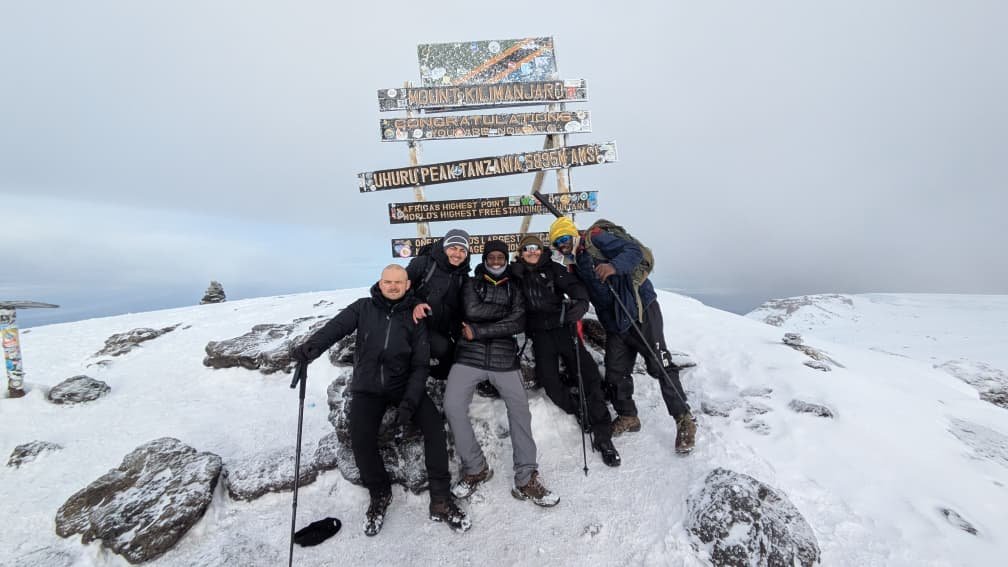
No. Uhuru Peak is Kilimanjaro's highest summit at 5,895 meters. A Kilimanjaro 360° tour focuses on the mountain's surrounding region rather than a summit-oriented high-altitude expedition.
Kilema Route vs Kilimanjaro 360° vs Shira Plateau Cycling
Kilimanjaro cycling information is easier to understand when the different locations are compared separately. Although they share the Kilimanjaro destination name, these activities have different purposes, environments and operating arrangements.
| Feature | Kilema Route | Kilimanjaro 360° | Shira Plateau | Information |
|---|---|---|---|---|
| Location | Inside Kilimanjaro National Park | Surrounding mountain region | Western Kilimanjaro plateau | Read More |
| Main concept | Summit-oriented cycling corridor | Regional mountain circuit | Non-summit plateau cycling | Compare |
| Typical landscape | Mountain ecological zones | Villages, farmland and rural landscapes | High open volcanic plateau | Landscapes |
| Six-day format | Specialist expedition descriptions | Regional multi-day circuit descriptions | Usually a separate non-summit activity | Six-Day Guide |
| Altitude characteristics | Significant high-altitude exposure | Variable lower regional elevations | High plateau elevation | Safety Facts |
| Route consistency | Designated park cycling area | Operator-specific circuit variations | Designated park cycling area | Regulations |
Why Do Kilimanjaro Cycling Websites Use Different Route Names?
Some tourism websites use "Kilimanjaro biking" as an umbrella phrase for several different activities. Others refer specifically to the Kilema mountain route, the Shira Plateau or a wider Kilimanjaro 360° circuit.
An accurate article should identify the location and type of cycling experience before discussing its duration or price.
Six-Day Kilimanjaro Bike Tour – How Kilema and 360° Programs Differ
A six-day tour description refers to the overall duration of a particular product. It does not establish a universal daily cycling schedule, specific overnight locations or guaranteed conditions.
For Kilema, a six-day package is associated with an expedition inside the mountain environment. For Kilimanjaro 360°, the same duration may describe a regional journey around the mountain.
Six-Day Kilema Expedition – General Program Structure
The following overview explains the kinds of topics found in published six-day mountain cycling programs. It is an editorial comparison, not a navigation plan or operational expedition itinerary.
| Program Day | General Theme | Key Description | Details |
|---|---|---|---|
| Day 1 | Mountain environment introduction | National park context, lower mountain vegetation and the characteristics of the cycling program. | Overview |
| Day 2 | Changing ecological zones | Understanding Kilimanjaro's forest, heathland and moorland environments. | Ecosystems |
| Day 3 | Altitude and mountain conditions | How higher elevation influences the body, weather and professional decisions. | Health |
| Day 4 | Upper mountain geography | Volcanic scenery, exposed alpine conditions and the Kibo region. | Geography |
| Day 5 | Specialist expedition considerations | The limits of bicycle travel, changing conditions and safety priorities. | Safety |
| Day 6 | Environmental responsibility | Mountain conservation, regulated use of park facilities and responsible tourism. | Conservation |
Six-Day Kilimanjaro 360° – General Regional Themes
A Kilimanjaro 360° circuit is better described through its geographical diversity than through a fixed national park summit sequence.
| Program Theme | Regional Feature | What Makes It Distinct | Further Reading |
|---|---|---|---|
| Mountain foothills | Lower slopes of Kilimanjaro | Rural landscapes and mountain views. | 360° Concept |
| Agricultural communities | Coffee and banana-growing areas | Cultural and agricultural heritage. | Culture |
| Western landscapes | Open plains and rural areas | Different vegetation and settlement patterns. | Landscapes |
| Northern region | Communities and mountain surroundings | Different perspectives of the Kilimanjaro massif. | Regional Facts |
| Eastern slopes | Rural settlements and natural features | Changes in vegetation and land use. | Environment |
| Full circuit concept | Connections around the mountain region | Overall circuit depends on the published itinerary. | Compare |
Landscapes and Ecological Zones Associated with Kilema Mountain Biking
Mount Kilimanjaro is internationally recognized for the dramatic changes in its landscapes over relatively short geographical distances.
The mountain includes lower cultivated areas, montane forest, heath and moorland, alpine desert and the extreme summit environment.
Kilema cycling descriptions often emphasize this ecological diversity because the mountain environment changes substantially with elevation.
Montane Rainforest
Kilimanjaro's lower forest areas support dense vegetation, varied plant life and important wildlife habitats.
Heath and Moorland
Forest gradually gives way to more open vegetation. The landscape becomes increasingly exposed to changing mountain weather.
Alpine Desert
Higher areas contain volcanic rock, sparse vegetation and considerable environmental exposure.
Kibo
Kibo is Kilimanjaro's highest volcanic formation and contains Uhuru Peak.
Mawenzi
Mawenzi is famous for its steep, rugged and jagged volcanic appearance.
Shira
Shira forms part of Kilimanjaro's western volcanic landscape and plateau system.
Why Does the Landscape Change So Much?
Temperature, rainfall, altitude and exposure influence the natural conditions found across Kilimanjaro.
These differences help explain why the mountain contains several recognizable ecological zones rather than one consistent vegetation type.
Shira Plateau Cycling vs Kilema Route – Understanding the Difference
Tanzania National Parks Authority distinguishes between cycling activities associated with the Kilema corridor and non-summit cycling in the Shira Plateau area.
Shira Plateau is located on the western side of Kilimanjaro. Its open volcanic landscape differs from the forested lower slopes.
The Shira Plateau cycling experience should not be described as the same activity as the Kilema summit-oriented cycling corridor.
Is Shira Plateau Part of Kilimanjaro 360°?
Not automatically. Kilimanjaro 360° generally describes a regional circuit around the mountain, while Shira Plateau is a distinct high-altitude park destination.
A broader holiday may contain separately organized experiences, but that does not turn them into a single official cycling route.
| Question | Kilema | Shira Plateau | Read More |
|---|---|---|---|
| Official cycling identity | Summit-oriented park corridor | Non-summit park cycling area | Rules |
| Primary setting | Mountain elevation zones | High western plateau | Geography |
| Altitude considerations | Significant | Significant | Safety |
| Same as regional 360°? | No | No | 360° Guide |
Culture, Communities and Landscapes Around Mount Kilimanjaro
The wider Kilimanjaro region is shaped not only by its mountain scenery but also by the communities living around its lower slopes.
The Chagga people have a long cultural relationship with Kilimanjaro's fertile southern slopes, while Maasai communities form part of the wider northern Tanzania cultural landscape.
Chagga Heritage and Agriculture
Kilimanjaro's lower slopes are associated with coffee, banana cultivation and extensive agricultural traditions.
These landscapes contrast strongly with the exposed upper mountain and help explain the geographical diversity described in regional cycling tours.
Maasai Communities and the Wider Plains
Parts of northern Tanzania are home to Maasai communities with distinctive cultural traditions and pastoral histories.
Responsible tourism should represent communities respectfully, avoid stereotypes and recognize the importance of local consent and cultural dignity.
Why Does a Kilimanjaro 360° Tour Include More Cultural Content?
A regional cycling circuit focuses on places around the mountain, including populated landscapes and rural areas.
By contrast, a high-altitude Kilema expedition is primarily associated with the protected mountain environment.
Accommodation Differences – Kilema Mountain Cycling vs 360° Tours
Accommodation descriptions are another important way to distinguish between Kilimanjaro's specialized mountain expeditions and cycling experiences around the surrounding region.
High-altitude mountain itineraries may involve designated mountain facilities, whereas regional circuit descriptions may include lodges, hotels or other local accommodation.
| Accommodation Type | General Description | Tour Context |
|---|---|---|
| Mountain hut | Basic designated national park accommodation. | Certain Kilimanjaro mountain programs. |
| Mountain camping | Designated camping under an authorized itinerary. | Some specialist mountain expeditions. |
| Regional lodge | Accommodation outside the high mountain. | Some Kilimanjaro 360° products. |
| Moshi hotel | Standard town accommodation. | Northern Tanzania visitor services. |
| Arusha hotel | Standard town accommodation. | Regional tourism and safari travel. |
Is Accommodation Included in Every Tour Price?
No universal inclusion applies across all advertised products. Accommodation should be described clearly within each official package.
Are Mountain Huts the Same as Hotels?
No. Mountain huts are basic facilities associated with the protected high-altitude environment.
They should not be compared with hotels and lodges found in Moshi, Arusha or the surrounding mountain region.
Kilema Route and Kilimanjaro Cycling Weather in 2026–2027
Weather around Mount Kilimanjaro varies according to season, elevation and geographical location.
Conditions near Moshi can be very different from conditions inside the high-altitude national park.
The region generally experiences a longer rainfall period around March through May and a shorter rainfall period usually associated with parts of November and December.
These are broad seasonal patterns, not forecasts for a particular 2026 or 2027 date.
General Monthly Climate Guide
| Month | General Northern Tanzania Pattern | Mountain Weather Consideration |
|---|---|---|
| January | Often relatively drier | Upper mountain remains unpredictable |
| February | Often relatively drier | Strong elevation-related variation |
| March | Transition toward longer rains | Increasing rain potential |
| April | Generally rainy period | Wet conditions possible |
| May | Rainy conditions may continue | Visibility and surface conditions vary |
| June | Transition toward drier season | Cooler mountain conditions |
| July | Usually part of dry season | Cold high-altitude environment |
| August | Usually relatively dry | Wind and temperature variation |
| September | Often relatively dry | Mountain weather remains changeable |
| October | Seasonal transition | Changing rainfall patterns |
| November | Short rains commonly occur | Wet conditions possible |
| December | Variable short-rains influence | Uncertain high-altitude conditions |
Do Kilema and Kilimanjaro 360° Experience Identical Weather?
No. A summit-oriented Kilema expedition involves much higher elevations than a regional mountain circuit.
Differences in altitude, exposure and local geography can produce very different conditions at the same time of year.
Does a Dry Month Guarantee Suitable Conditions?
No. Dry-season averages do not guarantee suitable conditions on an individual day. Rain, cold, wind and sudden changes remain possible.
Kilema Route 6-Day Kilimanjaro Bike Tour Prices 2026–2027
Publicly advertised prices for Kilimanjaro cycling products vary between operators because the packages do not necessarily include the same services.
A specialized high-altitude expedition has a different operating structure from a regional six-day circuit around Kilimanjaro. Direct price comparisons can therefore be misleading.
A responsible price description should identify the official route, the type of accommodation and the services included in the published product.
| Product Description | Cost Category | Important Pricing Difference | More Information |
|---|---|---|---|
| 6-Day Kilema Mountain Cycling | Specialist expedition quotation | National park and high-altitude support arrangements. | Route Facts |
| 6-Day Kilimanjaro 360° | Regional tour quotation | Circuit, regional accommodation and program differences. | 360° Facts |
| Shira Plateau Cycling | Separate park activity | Different authorized route and program duration. | Shira Facts |
| Moshi or Arusha Accommodation | Hotel cost varies | Location, room category and included nights. | Accommodation |
Why Are Exact Prices Not the Same Across Every Website?
A six-day Kilema product may describe a specialist mountain operation, while another six-day product may include regional accommodation and different tourism services.
Any displayed price should be supported by a specific, current package and a clearly explained inclusion list.
Kilema Route Mountain Biking – Altitude, Terrain and Health Risks
The Kilema high-altitude cycling environment presents serious physical and environmental risks that distinguish it from ordinary cycling routes.
Reduced oxygen availability, changing temperatures, rough volcanic ground and severe weather can all influence safety.
Altitude Illness
High-altitude exposure can produce symptoms including headache, nausea, dizziness and unusual fatigue. More serious symptoms can involve confusion, poor coordination and breathing difficulty.
These conditions require medical attention and should never be ignored.
Does Cycling Fitness Prevent Altitude Illness?
No. Athletic experience or cycling fitness does not eliminate the risk of altitude illness. Individual responses to altitude vary significantly.
Can Every Kilimanjaro Section Be Cycled?
No. The mountain contains steep, rocky, loose and exposed terrain. Some sections are not suitable for cycling under particular conditions.
A product description should not promise continuous riding to the summit or across every high-altitude section.
What Do National Park Regulations Cover?
Tanzania National Parks Authority publishes mountain cycling requirements that address authorized activity areas, operator licensing, professional supervision, visitor welfare, environmental protection and safety measures.
Children and younger visitors are subject to specific park restrictions, including altitude-related limits. Current regulations and safety decisions must take precedence over promotional material.
Kilimanjaro National Park Cycling Regulations and Environmental Conservation
Kilimanjaro National Park is a protected natural area managed by Tanzania National Parks Authority.
Cycling activity within the park is subject to specific rules that distinguish it from ordinary riding on public roads outside the park.
Why Are Designated Cycling Areas Important?
Designated cycling areas help park management balance visitor activity with conservation and other legitimate uses of the protected environment.
Environmental Responsibility
Kilimanjaro supports ecosystems ranging from tropical mountain forest to extreme high-altitude environments.
Responsible tourism should protect vegetation, wildlife habitats and the mountain's natural landscape.
Respect for Local Communities
Cycling tourism in the wider Kilimanjaro region should respect the privacy, property and cultural traditions of local communities.
Accurate route descriptions also help prevent confusion between activities inside the national park and those taking place in surrounding populated areas.
Kilema Route 6-Day Kilimanjaro Bike Tour and 360° Cycling FAQs 2026–2027
1. What is the Kilema Route Kilimanjaro bike tour?
It is a specialized mountain cycling expedition associated with the designated Kilema cycling corridor in Kilimanjaro National Park, Tanzania.
2. Is the Kilema Route officially recognized?
Yes. Tanzania National Parks Authority identifies Kilema as the summit-oriented mountain cycling route in Kilimanjaro National Park.
3. What does a six-day Kilema bike tour mean?
It describes a six-day specialist expedition product. The exact operating program differs by its approved itinerary.
4. Is Kilimanjaro 360° the same as Kilema?
No. Kilema is a high-altitude national park cycling corridor. Kilimanjaro 360° describes a regional cycling circuit around the mountain.
5. Does Kilimanjaro 360° reach the summit?
No. The typical 360° concept focuses on the surrounding Kilimanjaro region rather than Uhuru Peak.
6. Is every section of Kilema rideable?
No. Terrain, altitude, weather, park restrictions and professional safety decisions can prevent riding on some sections.
7. Is the Kilema bike route suitable for casual cyclists?
It is not an ordinary recreational cycling path. Kilema involves serious high-altitude and mountainous environmental hazards.
8. What is the difference between Kilema and Shira cycling?
Kilema is identified with summit-oriented cycling, while Shira Plateau is an authorized non-summit cycling area.
9. What is the highest point of Kilimanjaro?
Uhuru Peak is the highest point of Kilimanjaro and Africa, at 5,895 meters above sea level.
10. Does physical fitness eliminate altitude illness?
No. Physical fitness does not guarantee protection against altitude-related health problems.
11. Are Kilema and Marangu the same route?
No. Kilema is the designated cycling corridor, while Marangu is a well-known trekking route associated with mountain huts.
12. Is Kilimanjaro 360° one fixed cycling circuit?
Not necessarily. Published regional cycling circuits differ in total distance, accommodation and geographical coverage.
13. Does a six-day cycling tour include six days of riding?
Not necessarily. A six-day product may include non-riding activities and other program components. The label alone is not sufficient.
14. What landscapes surround Kilimanjaro?
The region includes agricultural communities, lower mountain forest, rural plains and volcanic landscapes, while the upper mountain contains alpine environments.
15. What is the weather like on Kilema?
Mountain conditions vary with elevation and season. Cold, rain, wind and rapid changes can occur.
16. Is Kilimanjaro open throughout the year?
Kilimanjaro National Park operates year-round, subject to its regulations, specific activity permissions and operational conditions.
17. Are national park cycling regulations important?
Yes. Park regulations govern authorized areas, visitor welfare, environmental protection and professional mountain operations.
18. Does Kilimanjaro 360° include cultural landscapes?
Yes. Regional circuit descriptions often feature rural communities, agriculture and cultural landscapes surrounding the mountain.
19. Are prices identical for Kilema and 360° cycling?
No. These products have different operating environments and inclusion structures. There is no universal shared price.
20. Does an advertised cycling expedition guarantee summit success?
No. No advertised program can guarantee summit access or success. Weather, altitude, health and park decisions can affect an expedition.
21. Are children subject to special mountain cycling restrictions?
Yes. Tanzania National Parks Authority publishes requirements affecting younger visitors, including restrictions related to supervision and elevation. Current park rules must be respected.
22. Is Shira Plateau a summit cycling experience?
No. TANAPA identifies Shira Plateau as the non-summit cycling option within Kilimanjaro National Park.
23. Does December guarantee dry mountain weather?
No. December can be influenced by short-rains conditions, and upper mountain weather remains unpredictable.
24. Is the 2026–2027 route information the same as confirmed availability?
No. General information about a cycling route does not establish that a particular operator has a confirmed departure, approved program or available places.
Understanding Kilema Mountain Biking and Kilimanjaro 360° Cycling
The Kilema Route and Kilimanjaro 360° represent two distinct ways in which tourism websites describe cycling around Mount Kilimanjaro.
Kilema is associated with a designated high-altitude cycling corridor inside Kilimanjaro National Park, while Kilimanjaro 360° generally refers to regional cycling circuits around the mountain.
Understanding the difference is essential for accurate route descriptions, responsible tourism information and clear comparisons of six-day cycling programs in 2026 and 2027.